Types of Duvets: A Simple Guide
If you’re shopping for better sleep, understanding the different types of duvets is the first step toward finding your perfect match. A duvet is a soft, pillowy insert designed to slide inside a removable cover, giving you warmth without the bulk of a traditional comforter. The cover protects the insert, makes washing easier, and lets you refresh your bedroom style on a budget. But the duvet itself is where comfort truly lives.
Not every duvet works for every sleeper. The fill material, warmth level, construction method, and cover fabric all influence how a duvet feels and performs. This guide walks you through every major duvet type, from plush down to temperature-regulating wool, so you can pick the one that fits your sleep habits, climate, and values.
Fill Material Types

The fill is the heart of any duvet. It controls warmth, weight, breathability, and even how the duvet drapes over your bed.
Down Duvets
Down comes from the soft undercoating beneath the feathers of ducks or geese. It has no quills, which makes it lightweight, breathable, and incredibly insulating. Down clusters trap warm air efficiently, giving you serious warmth without heavy weight.
- Best for: Cold sleepers, year-round use in temperate climates, and anyone chasing that plush hotel-bed feel.
- Key benefit: High fill power delivers maximum loft with minimal weight.
- Ethical note: Look for the Responsible Down Standard (RDS) certification to confirm humane sourcing.
- Construction: Often uses baffle box design to maximize loft and prevent cold spots.
Premium options like the Westin Down Duvet and Luxury Collection Down Duvet use high-quality goose down with pure cotton shells for breathability and durability.
Down Alternative Duvets
Down alternative duvets use synthetic microfibers engineered to mimic the softness and warmth of natural down. They offer a similar feel without animal products.
- Best for: Allergy sufferers, vegans, families with kids, and anyone who needs frequent machine washing.
- Key benefit: Hypoallergenic, budget-friendly, and easy to maintain.
- Performance: Breathable and moisture-wicking, especially in hotel-grade versions from W Hotels and Marriott Bonvoy.
- Warmth: Balanced for comfortable year-round use.
These duvets typically use box stitching to keep fill evenly distributed. If you want the look of down with less maintenance, this is your go-to option.
Wool Duvets
Wool is a natural fiber with active temperature regulation. It keeps you warm in winter and cool in summer by wicking moisture and allowing airflow.
- Best for: Sleepers who overheat at night or live in climates with big seasonal swings.
- Key benefit: Naturally resists dust mites, mold, and mildew.
- Ideal for: Allergy sufferers and anyone avoiding chemical treatments.
Wool duvets are heavier than down but offer unmatched breathability and humidity control. If you wake up sweaty in summer but cold in winter, wool solves both problems.
Warmth Levels by Weight
Duvets come in different weight classes. Matching the weight to your sleep temperature and climate is key to staying comfortable year-round.
Lightweight Duvets
Lightweight duvets are designed for hot sleepers and warm climates. They provide gentle warmth without trapping heat.
- Use case: Summer months, tropical environments, or as a layering piece.
- Fill type: Often down alternative or low-fill-power down.
- Feel: Airy, breathable, minimal bulk.
You can use a lightweight duvet alone in summer or layer it under a heavier blanket in winter for adjustable warmth.
Medium-Weight Duvets
Medium-weight is the most popular choice because it balances warmth and breathability for most sleepers.
- Best for: Year-round use in moderate climates.
- Example: The Westin Mid-Weight Down Blanket uses premium down in a breathable shell.
- Performance: Warm enough for chilly nights, light enough to prevent overheating.
If you’re unsure where to start, medium-weight is the safest, most versatile pick.
Heavyweight and Plush Duvets
Heavyweight duvets prioritize insulation and loft for cold sleepers and frigid environments.
- Best for: Winter months, drafty rooms, or anyone who always feels cold.
- Fill density: High, with maximum loft for trapping heat.
- Feel: Deeply plush, enveloping, and cozy.
These are less breathable, so they’re not ideal for hot sleepers. But if winter nights leave you shivering, a heavyweight duvet makes a real difference.
Fill Power and Insulation Quality

Fill power measures how much space one ounce of down occupies. It’s the key to understanding warmth versus weight.
- Higher fill power (600+): Larger down clusters mean more loft and better insulation with less weight.
- Lower fill power (400–500): Denser, heavier feel with less fluff.
A 650-fill-power goose down duvet will be lighter and fluffier than a 500-fill duck down duvet of the same weight. High fill power is what gives luxury hotel beds their signature cloud-like feel.
Synthetic fills don’t use fill power ratings. However, quality microfibers can still deliver excellent warmth and loft. Look for labels like “high-loft” or “premium fiber” when shopping for down alternatives.
Duvet Construction Methods
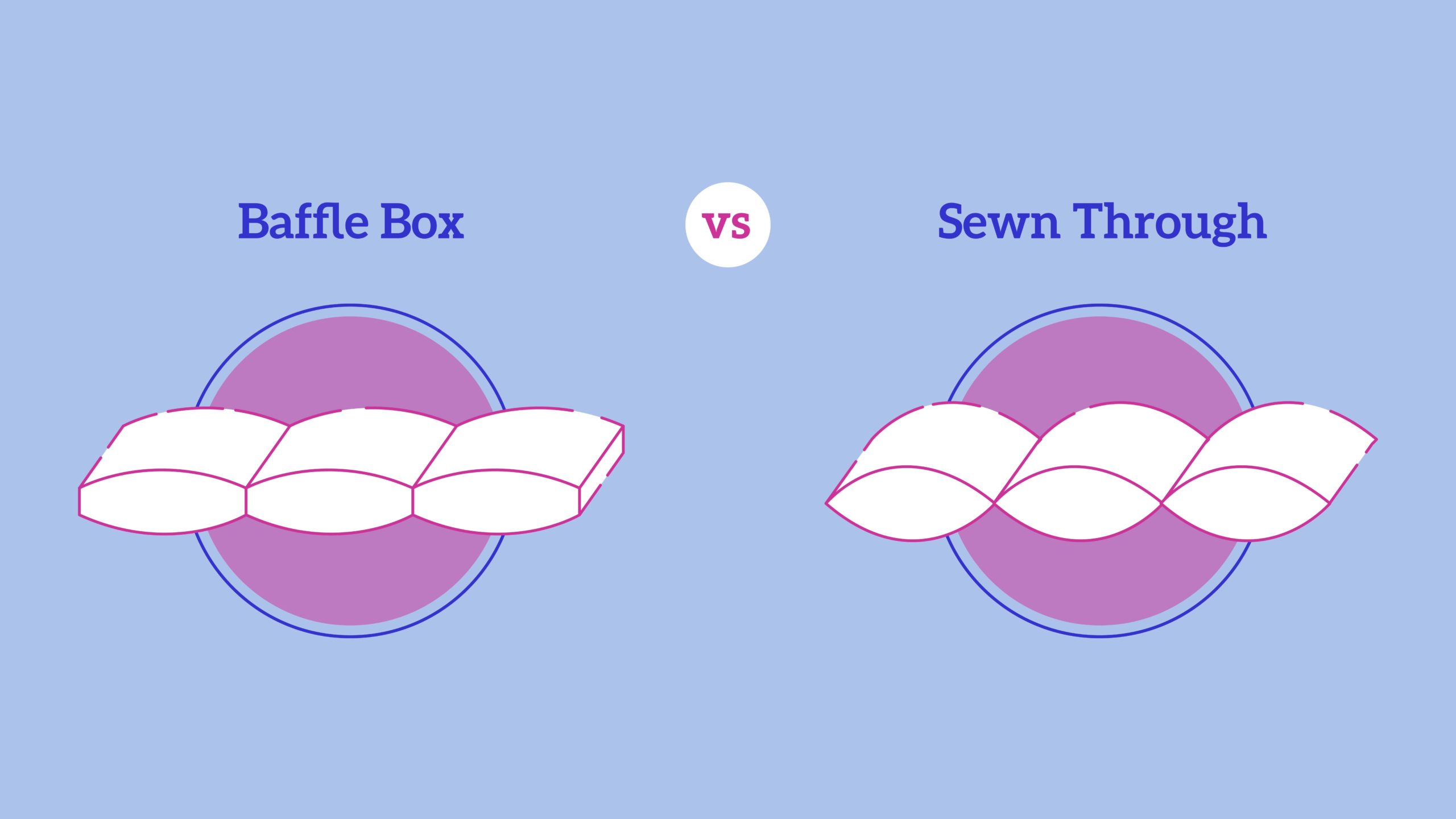
How a duvet is built affects fill distribution, durability, and appearance. The two main construction types are baffle box and stitch-through.
Baffle Box Construction
Baffle box construction uses fabric walls (baffles) sewn between the top and bottom layers, creating three-dimensional pockets.
- Benefits:
- Allows fill to expand fully for maximum loft.
- Prevents cold spots by keeping fill evenly distributed.
- No stitching compression across the surface.
- Best for: High-end down duvets and anyone wanting a plush, hotel-style look.
Duvets like the Luxury Collection Down Duvet use this method for superior performance and longevity.
Stitch-Through Construction
In stitch-through construction, the top and bottom fabrics are stitched directly together, creating flat compartments.
- Benefits:
- Lighter weight and more breathable.
- Common in summer-weight or down alternative duvets.
- Drawback: Can create cold spots along stitch lines where fill is compressed.
This method is cost-effective and functional but doesn’t match the loft of baffle box. It’s a solid choice for budget-friendly or seasonal duvets.
Quilted Designs
Some duvets feature diamond or square quilting (like the Sheraton Diamond Down Blanket) for a refined look.
- Function: Keeps fill in place and adds visual texture.
- Trade-off: Slightly reduces maximum loft compared to baffle box.
Quilting balances aesthetics with light hold. It’s a good middle ground for those who want structure without flatness.
Duvet Cover Materials
The cover protects the insert and defines your bed’s look and feel. It’s also the easiest part to swap for a quick style refresh.
Linen Duvet Covers
Linen is highly breathable, moisture-wicking, and durable.
- Best for: Hot sleepers, humid climates, or minimalist, textured styles.
- Feel: Crisp at first, softens over time with a relaxed, lived-in look.
- Care: Machine washable, becomes softer with each wash.
Linen covers are ideal for summer or year-round use if you tend to overheat.
Cotton Duvet Covers
Cotton is versatile, soft, and easy to care for, making it the most popular cover choice.
Sateen Cotton
- Feel: Smooth, silky, with a subtle sheen.
- Best for: Luxury feel, cool nights.
- Note: Slightly less breathable than percale.
Percale Cotton
- Feel: Crisp, cool, and matte.
- Best for: Hot sleepers and anyone who loves that fresh hotel-sheet feel.
- Weave: Tightly woven, durable, and breathable.
Brushed Cotton
- Feel: Ultra-soft and fuzzy, like a worn t-shirt.
- Best for: Cold sleepers or winter use.
Cotton-linen blends offer a hybrid of softness and durability, perfect for everyday use.
Sizing: How to Pick the Right Fit
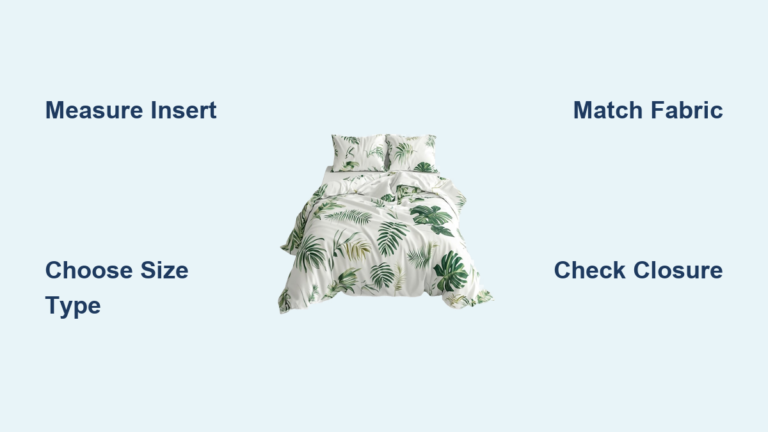
A duvet should drape generously over your mattress, not just match its exact size.
Standard Sizing Guide
| Bed Size | Mattress Size | Recommended Duvet Size |
|---|---|---|
| Twin | 38″ x 75″ | 38″ x 75″ (minimum) |
| Twin XL | 38″ x 80″ | 38″ x 80″ |
| Full/Double | 53″ x 75″ | 53″ x 75″ |
| Queen | 60″ x 80″ | 60″ x 80″ |
| King | 76″ x 80″ | 76″ x 80″ |
| California King | 72″ x 84″ | 72″ x 84″ |
Sizing Tip
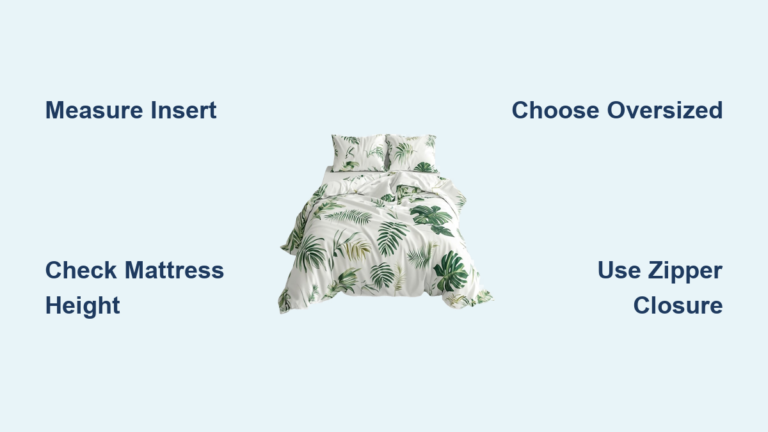
For a luxurious drape, choose a duvet 12 inches longer and 16 inches wider than your mattress. A Queen mattress (60×80) should ideally pair with a duvet around 72″ x 96″ or larger.
- Deep mattresses? Size up.
- Want floor-length drape? Go oversized.
Many brands offer “Oversize” or “Euro” options for a fuller, more dramatic look.
How to Use and Maintain Your Duvet
Proper care extends your duvet’s life and keeps it looking and feeling fresh.
Inserting the Duvet
- Turn the cover inside out.
- Align the duvet’s top with the cover’s top opening.
- Insert the duvet and smooth out air pockets.
- Tie the corner loops to the cover’s internal ties to prevent shifting.
Skip the ties, and your duvet will bunch up by morning. Four corner ties are ideal for maximum stability.
Washing and Drying
- Wash the cover: Every 1–2 weeks.
- Wash the insert: Only 1–2 times per year, or as needed.
Machine Wash Tips:
– Use a front-loading or commercial washer (top loaders can damage the duvet).
– Cold or warm water, gentle cycle, mild detergent.
– Dry on low heat with clean tennis balls or dryer balls to restore loft.
– Dry completely, because dampness causes clumping and mildew.
Storage Tips
- Store in a cool, dry, breathable bag.
- Never use vacuum-seal bags, as they crush the fill and ruin loft.
- Air out the duvet occasionally to prevent musty odors.
Styling Your Duvet Like a Pro
Your duvet is the focal point of your bedroom. A few styling tricks can elevate the entire room.
Create a Hotel-Like Look
- Use a high-loft white duvet with a crisp percale cover.
- Add multiple pillows (standard, euro, king) in white or neutral tones.
- Layer a textured blanket (waffle weave, knit) at the foot of the bed.
Brands like Westin and Sheraton use this formula for their signature luxury aesthetic.
Seasonal Styling
- Winter: Fluffy down duvet, brushed cotton cover, cashmere throw.
- Summer: Lightweight down alternative, linen cover, minimal layers.
Change just the cover to refresh your room without buying a new duvet.
Color and Texture Tips
- Neutrals (white, ivory, gray): Timeless and easy to accessorize.
- Bold colors or patterns: Make a statement through accent pillows or throws.
- Texture: Mix materials like linen, cotton, and knit for depth and interest.
Who Should Choose Which Duvet?

Let’s match duvet types to real-life sleep needs.
Allergy Sufferers
- Best choice: Wool or hypoallergenic down alternative.
- Why: Wool resists mites and mold; synthetic fills avoid feather allergens.
- Avoid: Non-RDS-certified down.
Hot Sleepers
- Best choice: Lightweight down alternative with a percale cotton cover.
- Why: Breathable materials prevent overheating.
- Tip: Use the cover alone in summer.
Cold Sleepers
- Best choice: Heavyweight down or down alternative with a brushed cotton cover.
- Why: Maximum insulation and cozy texture.
Eco-Conscious Buyers
- Best choice: RDS-certified down or wool.
- Why: Natural, biodegradable, and ethically sourced.
Frequently Asked Questions About Duvet Types
What is the best duvet type for hot sleepers?
Lightweight down alternative duvets paired with percale cotton or linen covers work best. These materials breathe well and wick moisture, keeping you cool throughout the night.
How do I choose between down and down alternative?
Choose down if you want maximum loft, luxury feel, and superior warmth-to-weight ratio. Choose down alternative if you have allergies, prefer easy machine washing, or want a budget-friendly option.
What does fill power mean in a duvet?
Fill power measures the loft of down. Higher fill power (600+) means larger clusters, better insulation, and a fluffier feel with less weight. Lower fill power (400–500) means denser, heavier fill.
Are wool duvets good for year-round use?
Yes. Wool naturally regulates temperature, keeping you warm in winter and cool in summer. It also resists dust mites, mold, and mildew, making it ideal for allergy sufferers.
How often should I wash my duvet insert?
Wash your duvet insert only 1–2 times per year. Wash the cover every 1–2 weeks to protect the insert from sweat, oils, and allergens.
What size duvet should I buy for a Queen bed?
A standard Queen duvet is 60″ x 80″, but for a luxurious drape, size up to around 72″ x 96″. Adding 12 inches in length and 16 inches in width ensures full coverage on all sides.
Key Takeaways for Choosing the Right Duvet Type
Choosing the right type of duvet comes down to your sleep style, climate, and personal values. Down delivers unmatched luxury and loft for cold sleepers who want that cloud-like feel. Down alternative offers practical, hypoallergenic warmth that’s easy to care for and budget-friendly. Wool excels at temperature regulation, making it perfect for year-round use and allergy sufferers.
Match the weight to your season, the construction to your desired look, and the size to your mattress for a perfect drape. With a duvet cover system, you get style flexibility, easy maintenance, and long-term value. Start by identifying your sleep temperature and any allergy concerns, then narrow your choices by fill type and warmth level. Your best night’s sleep is just one duvet away.