

How to Wash a Duvet Insert
Your duvet insert works hard every night, trapping warmth and absorbing sweat, oils, and allergens. Yet most people go years without washing it, simply because they’re unsure how. The result? A musty smell, flat filling, and a sleep surface full of dust mites. Learning how to wash a duvet insert properly protects your investment, restores fluffiness, and creates a healthier bed.
The challenge is that not all duvets can be cleaned the same way. Down, wool, silk, and synthetic fills each require different temperatures, detergents, and drying methods. Use the wrong setting and you risk clumping, shrinkage, or permanent damage. Use the right method and your duvet comes out fresh, lofty, and ready for years of cozy sleep. This guide covers everything: reading care labels, choosing the right cycle, drying without clumping, and storing your duvet between seasons.
Check Your Duvet Type and Care Label First
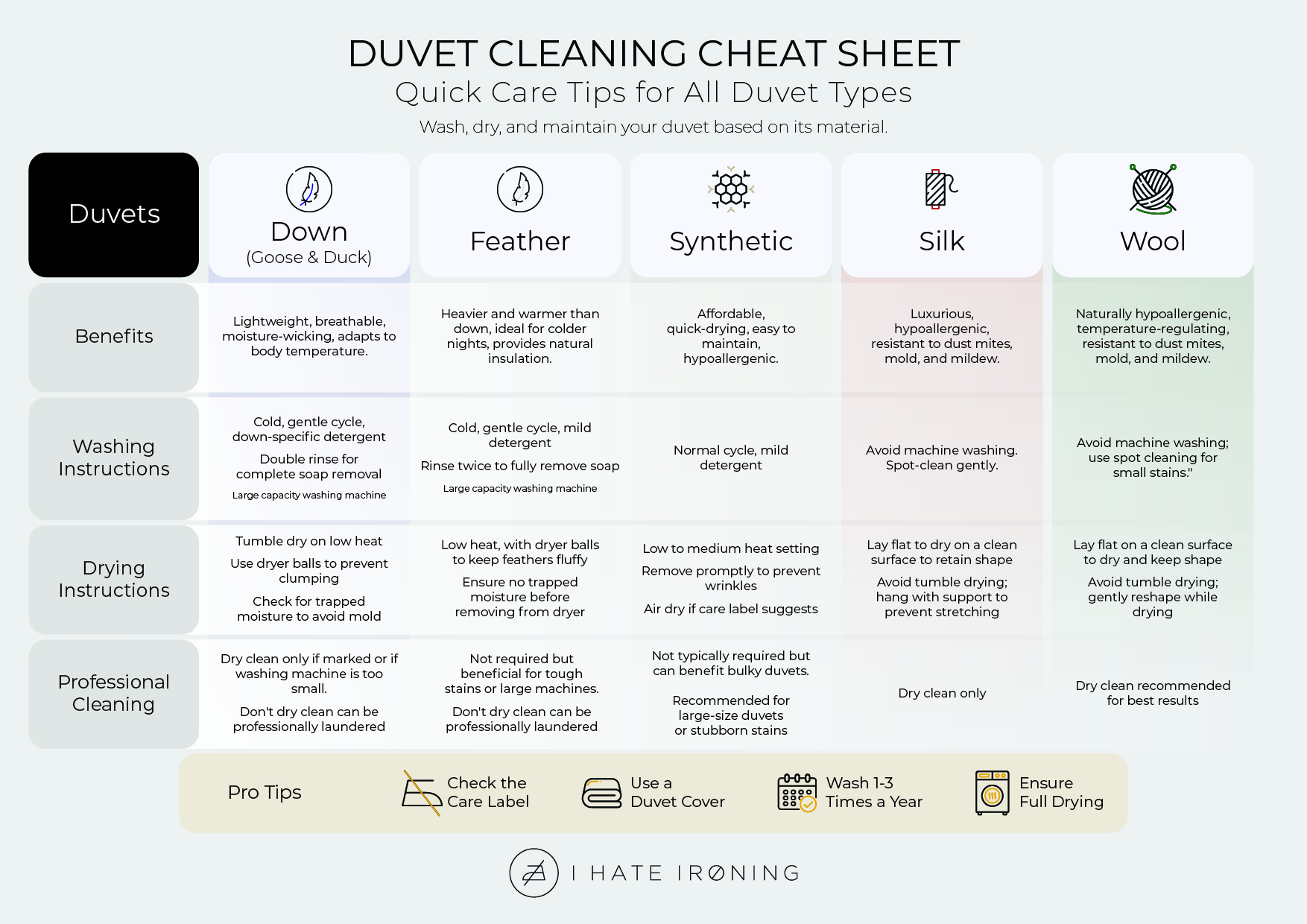
Before water touches your duvet, read the care label. That small tag tells you exactly what your insert can handle. Ignoring it can lead to shrinkage, fiber damage, or clumping that you can’t undo.
Identify the Fill Material
Natural fills include down, feather, wool, and silk. These are delicate and often require cold water, low heat, or professional cleaning. Silk and wool, in particular, may be dry-clean only.
Synthetic fills like polyester and microfiber are more forgiving. They tolerate machine washing, warmer water, and faster drying. They’re also hypoallergenic, making them a safer choice for allergy sufferers.
Confirm Washing Suitability
Some duvets aren’t designed for home washing. Large king-size inserts or heavily stitched designs may not fit in a standard machine. If the label says “dry clean only,” follow it. When in doubt, contact the manufacturer or take it to a professional cleaner.
Decide How Often to Wash Your Duvet Insert
Washing too often wears down the fibers. Waiting too long invites allergens. The right schedule depends on your bedding setup.
Standard Cleaning Schedule
Wash your duvet insert every 2 to 3 months, or about 3–4 times per year. This balances hygiene with fabric longevity.
Adjust Based on Your Bedding
Your setup changes the timeline:
- With a duvet cover: Wash every 3–4 months. The cover blocks most oils and sweat.
- Without a duvet cover: Wash every 1–2 months. Direct skin contact speeds up soiling.
- No top sheet: Wash every 3 months. More body oils reach the duvet.
Wash your duvet cover weekly, just like your sheets. It does the heavy lifting in keeping your insert clean.
Seasonal Considerations
Switch duvets with the seasons. Use a lighter insert in summer and a heavier one in winter. Always wash and fully dry your duvet before storing it. Storing a dirty or damp insert leads to mold, mildew, and pest problems.
Gather the Right Supplies
The wrong detergent or missing tools can ruin your wash. Set everything up before you start.
What You’ll Need
- Large-capacity front-loading washer (essential for queen or king duvets)
- Mild liquid detergent (use only 1/3 to 1/2 the normal amount)
- Oxygen-based stain remover (safe for most fabrics except wool and silk)
- Wool dryer balls or clean tennis balls in socks (prevents clumping)
- Clean white cloths and a soft brush (for spot treatment)
- Drying rack or clothesline (for air drying delicate fills)
What to Avoid
Never use fabric softener. It coats fibers, reduces insulation, and traps odor. Skip bleach too, especially on natural or colored fabrics. Both can permanently damage your duvet.
Inspect and Prep Before Washing
A few minutes of prep prevents damage and improves results.
Check for Damage
Look for tears, loose seams, or thin spots. Repair small rips with a needle and thread before washing. Damaged stitching can let filling escape during the cycle.
Remove and Wash the Cover
Always take off the duvet cover and wash it separately. It collects more dirt and needs more frequent cleaning. Use warm water and regular detergent.
Pre-Treat Stains
For visible stains:
– Mix 2–4 tablespoons of oxygen cleaner per gallon of water.
– Blot the solution onto the stain with a white cloth.
– Let it sit for 20 minutes.
– Dab gently. Don’t scrub hard.
Never use oxygen cleaners on wool, silk, or dry-clean-only fabrics. Test on a hidden area first if you’re worried about colorfastness.
Load and Wash the Duvet Correctly
Proper loading ensures even cleaning and protects your machine.
Choose the Right Machine
Use a front-loading washer with extra-large capacity. Top-loaders with agitators can damage stitching and trap filling inside the baffles. If your home machine is too small, head to a laundromat for a commercial washer.
Load the Duvet Loosely
Place the duvet in the drum first. It should fit with room to move. Overloading prevents water and detergent from reaching all areas. Toss in 2–3 wool dryer balls or tennis balls in clean socks to boost agitation and break up clumps.
Set the Correct Wash Cycle
- Cycle: “Gentle,” “Delicate,” or “Bulky/Heavy”
- Water Temperature:
- Natural fills (down, wool, silk): Cold or lukewarm
- Synthetic (polyester): Warm up to 60°C (140°F)
- Spin Speed: Medium to high, but skip the maximum if stitching looks weak
- Detergent: Add to the empty drum before loading, or use the dispenser with a low-suds formula
Run an Extra Rinse
Detergent residue causes stiffness and clumping. Use the Extra Rinse cycle if your machine has one. If not, run a second rinse-only cycle after the main wash.
Dry Thoroughly to Prevent Clumping

Drying is the most important step. Moisture left behind leads to mildew and lumps.
Tumble Dry with Dryer Balls
- Clean the lint filter.
- Place the duvet loosely in the dryer.
- Add 2–3 wool dryer balls or tennis balls.
- Set the heat:
– Natural fills: Low heat or Air Fluff
– Synthetic fills: Low to medium heat - Run for 30 minutes, then stop.
- Remove, shake hard, and break up clumps by hand.
- Return to the dryer and repeat until fully dry.
How Long Does Drying Take?
Expect 1.5 to 3+ hours depending on size and fill. Don’t rush with high heat; it damages fibers. The duvet is ready when it feels light, evenly fluffy, and completely dry in the center. Squeeze a section to check for hidden moisture.
Air Dry When Needed
- Wool: Dry flat on a rack to prevent stretching.
- Down or feather: Hang outdoors on a dry, low-humidity day.
- Synthetic: Dry on a rack indoors with good airflow.
- Hybrid method: Tumble dry 50–75% of the way, then air dry to finish.
Restore Loft and Fluffiness
Even after drying, your duvet may feel flat. Bring back the bounce.
Shake and Fluff Manually
Grab two corners and shake hard. This redistributes the filling and breaks up small clumps.
Final Dryer Boost
Run the duvet on low heat with dryer balls for 10–15 minutes. This maximizes loft and removes any last traces of moisture.
Spot Clean Minor Stains
You don’t always need a full wash. Spot cleaning works for small accidents.
Step-by-Step Spot Treatment
- Push the fill away from the stained area.
- Spray the spot lightly with water.
- Apply a small amount of gentle stain remover.
- Blot with a clean white cloth. Don’t rub.
- Let it sit for 20 minutes.
- Gently scrub with a soft toothbrush if needed.
- Rinse by spraying with water.
- Dry the area with a blow dryer or a quick tumble on low.
Keep Your Duvet Fresh Between Washes
Daily habits extend the time between washes and keep your bed smelling clean.
Daily Maintenance
- Air out your duvet every morning. Pull it back and let moisture evaporate.
- Sunlight helps. Natural UV light disinfects and reduces odors, especially in down and feather.
Long-Term Freshness
- Tuck lavender or mint sachets into storage containers to repel bugs and add a light scent.
- Never store duvets in plastic bags. Use breathable fabric containers or wooden boxes instead.
Store Seasonal Duvets the Right Way
Proper storage protects your duvet during off-seasons.
Before Storage
Make sure the duvet is 100% clean and dry. Any leftover moisture causes mold.
Best Storage Options
- Breathable boxes made of wood, rattan, or fabric
- Under-bed compartments in storage beds
- Cool, dry closets away from humidity
Avoid attics and basements where temperature and moisture levels swing wildly.
Troubleshoot Common Duvet Problems
Even with careful washing, issues can pop up. Here’s how to fix them.
Fix Clumping After Washing
Clumps form when drying is incomplete or agitation is too low. Re-dry with dryer balls, stopping every 30 minutes to shake and break up lumps by hand. Make sure the duvet is fully dry before storing.
Remove Soap Residue
A stiff or soapy feel means leftover detergent. Run a rinse and spin cycle without detergent. Repeat until the water runs clear.
Eliminate Musty Odors
A damp smell signals mildew. Re-wash with an oxygen-based cleaner and dry thoroughly using the full cycle with dryer balls. If the smell lingers, it may be time to replace the duvet.
Know When to Replace Your Duvet
Even well-cared-for duvets wear out. Replace yours if you notice:
- Permanent stains that won’t lift after washing
- Lumpy fill that refuses to fluff up
- Persistent musty smell despite thorough cleaning
- Allergy symptoms like dry mouth, sore throat, or itchy eyes upon waking
Most duvets last 5–10 years with proper care. If yours feels flat, heavy, or no longer keeps you warm, it’s time for a new one.
Frequently Asked Questions About Washing a Duvet Insert
Can you wash a duvet insert in a regular washing machine?
Only if it’s large enough. A standard home washer works for twin or full duvets. For queen or king sizes, you’ll need an extra-large front-loading machine, often found at laundromats. Forcing a duvet into a small machine prevents proper cleaning and can damage the stitching.
How often should you wash a duvet insert?
Every 2 to 3 months is standard. If you use a duvet cover, you can stretch it to every 3–4 months. Without a cover, wash every 1–2 months. Always wash the duvet cover weekly.
What temperature should you use to wash a duvet?
Use cold or lukewarm water for natural fills like down, wool, and silk. Synthetic fills like polyester can handle warm water up to 60°C (140°F), which helps kill dust mites and bacteria.
Can you put a duvet insert in the dryer?
Yes, most duvets can be tumble dried on low heat. Add 2–3 wool dryer balls or clean tennis balls in socks to prevent clumping. Expect 1.5 to 3+ hours of drying time. Make sure the duvet is 100% dry before using or storing it.
What detergent is best for washing a duvet?
Use a mild liquid detergent and only 1/3 to 1/2 of the normal amount. Heavy suds leave residue that causes stiffness and clumping. Avoid fabric softener and bleach.
How do you fix a duvet that’s clumped after washing?
Re-dry it with dryer balls on low heat. Stop every 30 minutes to shake the duvet and break up clumps by hand. Run an extra rinse cycle first if detergent residue is the cause. Make sure the duvet is completely dry before storing.
Final Thoughts on Washing a Duvet Insert
Washing a duvet insert isn’t complicated once you match the method to the fill. Start by reading the care label, then choose the right machine, detergent, and temperature. Always run an extra rinse, dry thoroughly with dryer balls, and store your duvet in a breathable container when not in use.
The payoff is worth it. A clean duvet stays fluffy, holds its warmth, and gives you a healthier sleep surface free of dust mites and allergens. Set a reminder to wash your insert every few months, and your duvet will feel like new for years to come.
Next step: Check your duvet’s care label today and mark your calendar for its next wash based on your bedding setup.