How to Style a Duet
Nothing transforms a bedroom faster than a beautifully styled duvet. The way your duvet is arranged, along with the layers around it, can turn an ordinary bed into a luxe retreat that feels both inviting and intentional. Whether you’re aiming for a crisp hotel look or a cozy, lived-in vibe, mastering how to style a duvet is the cornerstone of elevated bedroom design. This guide walks you through every step, from foundation layers to final flourishes, so you can create a bed that looks professionally styled and feels amazing to sleep in.
You’ll learn how to choose the right duvet setup, layer bedding for volume and texture, arrange pillows with purpose, and add finishing touches that make your bed the focal point of the room, all while keeping it functional for everyday use.
Build a Strong Bed Foundation
A perfectly styled duvet starts long before it hits the mattress. The base layers determine comfort, cleanliness, and visual polish.
Choose the Right Mattress Topper
The feel of your bed begins beneath the sheets. A quality topper adds softness, support, and volume, key for achieving that “sink-in” luxury.
– Memory foam: Ideal for pressure relief; gel-infused versions regulate heat.
– Down: Delivers a plush, cloud-like top layer; best for softness seekers.
– Wool: Naturally breathable and temperature-regulating; great for year-round use.
Always pair your topper with a waterproof protector to extend its life and keep it clean.
Pick Fitted Sheets That Stay Put
Nothing ruins a styled bed faster than loose or bunched sheets. Use deep-pocket or extra-deep fitted sheets if you have a thick mattress or topper.
– Measure your total mattress depth, including the topper, before buying.
– Look for sheets with full elastic for a snug fit.
– For beds without skirts, tuck the fitted sheet tightly under the box spring for a clean, seamless look.
Master the Top Sheet Technique
Even if you don’t sleep under one, a top sheet enhances the bed’s appearance and protects your duvet.
– Hospital corners: Tuck the foot of the sheet under the mattress, fold the side fabric diagonally, tuck the triangle, then fold the remaining flap down. This keeps the sheet tight and wrinkle-free.
– Pattern trick: Place the top sheet with the decorative edge facing down. When folded over the duvet, the trim flips up, adding subtle style.
Select the Ideal Sheet Fabric
Your sheet choice affects both comfort and aesthetics.
– Linen: Relaxed, breathable, and gets softer over time; perfect for a casual, organic look.
– Cotton percale: Crisp and cool; ideal for hot sleepers and warm climates.
– Cotton sateen: Silky, warm, and slightly shiny; great for a polished, elegant finish.
– Organic cotton: Durable and soft; mimics the feel of a favorite worn-in tee.
Stick to white or ivory for a timeless, clean base. Ivory hides stains better in homes with pets or kids.
Style Your Duvet for Maximum Impact
The duvet is the star of your bed. How you style it sets the tone for the entire room.
Duvet vs. Comforter: Know the Difference
- Duvet: An insert inside a removable cover. Lets you switch styles easily and protects the insert.
- Comforter: A single stitched piece, less versatile but low-maintenance.
For design flexibility and easy cleaning, duvets are the top choice for master bedrooms.
Choose the Right Duvet Insert
Your insert affects both look and comfort.
– Down: Luxuriously soft and lofty; ideal for a plush, high-end feel.
– Down alternative: Hypoallergenic and budget-friendly; mimics down without feathers.
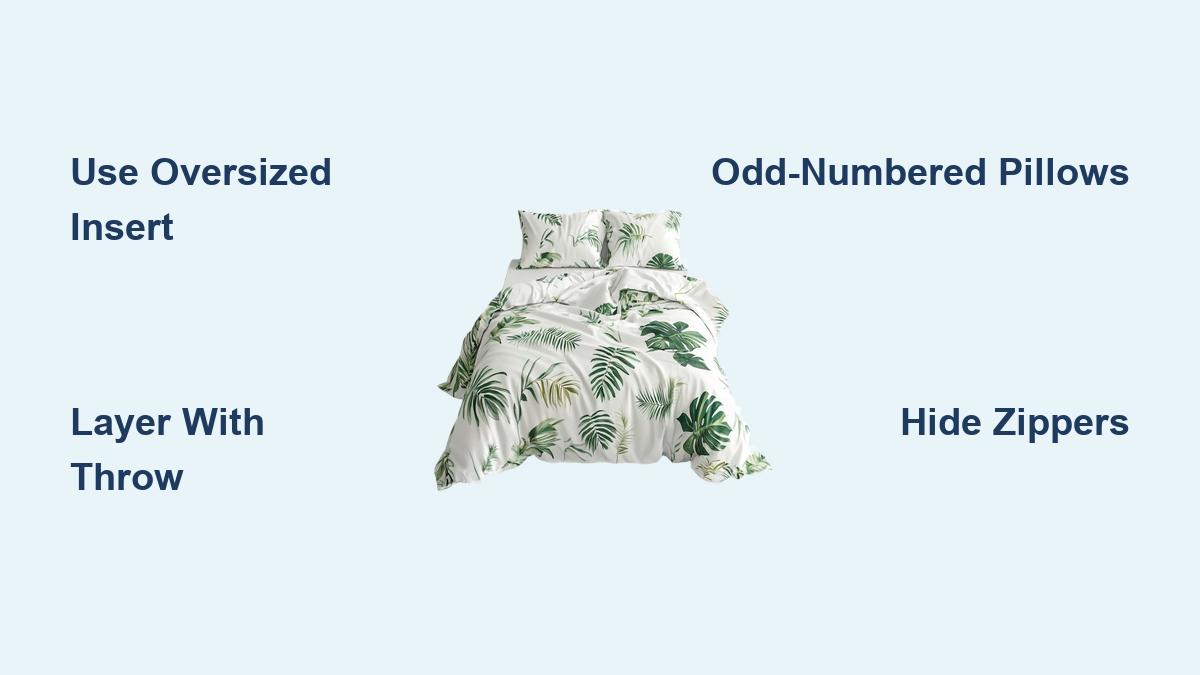
– Sizing tip: Use an insert one size larger than your cover for a full, overstuffed look.
Create Volume with Styling Tricks

Want that magazine-worthy fluff? Try these pro techniques:
– Double duvet method: Place a lightweight, functional duvet underneath (tucked in) and a heavier, decorative one on top. You get the look without the heat.
– Scandinavian sleep method: Use two twin duvets side-by-side on a king or queen bed. Prevents tug-of-war and makes styling symmetrical.
– Fold for warmth control: In summer, tri-fold the duvet at the foot of the bed to expose cool sheets. In winter, spread it fully across the mattress.
Skip the Duvet? Try These Alternatives
No duvet? No problem. These top layers work beautifully:
– Quilt: Lightweight and textured; great for layering or solo use.
– Coverlet: Woven, structured, and often quilted; adds visual interest without bulk.
– Weighted blanket: Use as a middle layer for grounding comfort and texture.
Arrange Pillows with Purpose
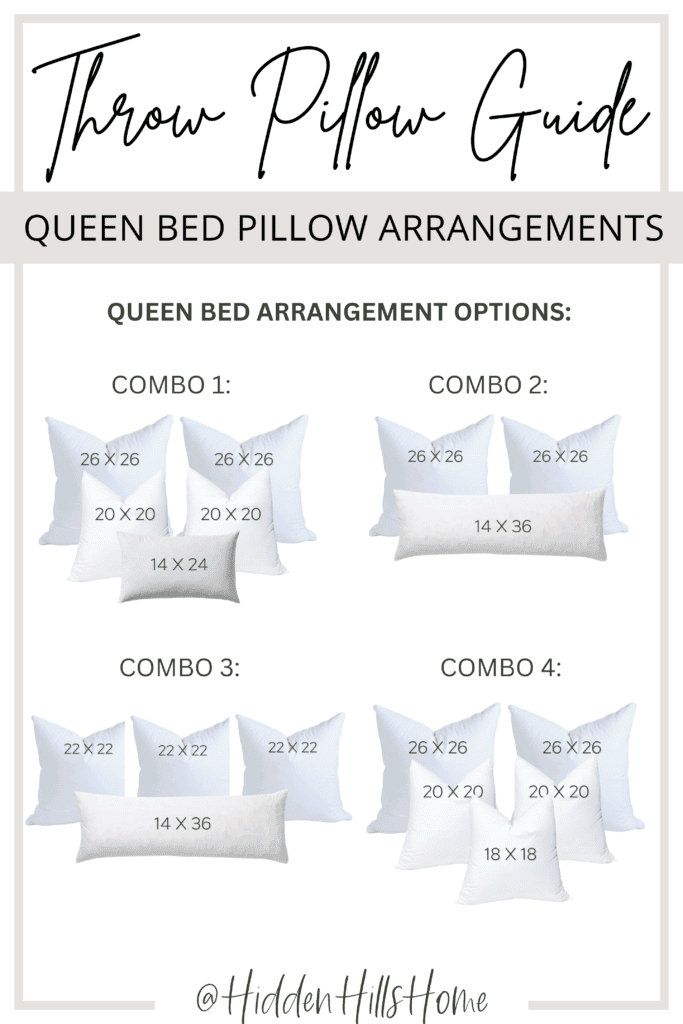
Pillows add height, balance, and personality. Done right, they turn your bed into a three-dimensional masterpiece.
Use the Right Pillow Types
Layer pillows from back to front, decreasing in size:
– Euro shams: Place vertically against the headboard. Use 1 for twin, 2 for queen, 3 for king.
– Standard/king shams: Sit in front of Euros; match or coordinate with duvet.
– Sleeping pillows: Positioned in front of shams. Use neutral cases if they’ll be exposed.
– Lumbar pillow: Adds a pop of color or pattern at the front center.
– Accent pillows: Small, decorative pieces in velvet, faux fur, or knit for texture.
Pick Full, Long-Lasting Inserts
Flat pillows ruin the look. Always:
– Choose inserts 2 inches larger than the cover.
– Use down, feather blend, or high-loft down alternative. Avoid polyester, which flattens fast.
Follow the Rule of Odds
Odd numbers (3, 5, or 7 pillows) are more visually appealing than even ones. For a queen bed, try:
– 2 Euro shams
– 2 standard shams
– 1 lumbar
– 2 accent pillows (total: 7)
Store Decorative Pillows Smartly
Since accent pillows often come off at night, keep a basket, bench, or ottoman nearby to store them neatly.
Add Finishing Touches That Pop

The final details make your bed feel curated, not cluttered.
Drape a Throw Blanket
A throw adds warmth and style.
– Placement: Drape casually over one corner for a relaxed look, or fold neatly across the foot for a tidy finish.
– Color: Use a bold or seasonal hue to introduce color without changing bedding.
– Texture mix: Layer a chunky knit over a smooth cotton blanket for depth.
Style with a Bed Tray
A decorative tray on the duvet adds function and charm.
– Contents: Add a book, candle, or remote for daily use.
– For guests: Personalize with a note, snack, or local guidebook.
– Swap seasonally: Change items to reflect holidays or moods.
Mix at Least Three Textures

Flat beds lack interest. Combine:
– Linen duvet + quilted cotton coverlet + waffle-weave throw
– Sateen sheets + velvet lumbar + faux fur accent
– Percale base + matelassé quilt + knit blanket
This contrast creates visual depth and tactile appeal.
Choose a Cohesive Color Palette

Color sets the mood. Pick wisely to create a calming, cohesive space.
Match Warm or Cool Tones
Stick to one temperature family:
– Warm: Creams, taupes, rusts, and terracotta.
– Cool: Grays, blues, whites, and sage greens.
Mix light, medium, and dark shades of the same color for dimension.
Use the Wardrobe Trick
Unsure what colors work? Pull out a favorite outfit. The hues that flatter you often translate beautifully to bedding.
Go Subtle or Bold
- Subtle: Keep the duvet neutral and add color through hidden layers, like a colored top sheet or a single accent pillow.
- Bold: Make the duvet the hero with a rich, saturated color or soft, calming pattern.
Avoid loud, busy prints; they can feel chaotic in a sleep space.
Adapt for Seasons and Style

Your bed should evolve with the weather and your mood.
Lighten Up for Spring and Summer
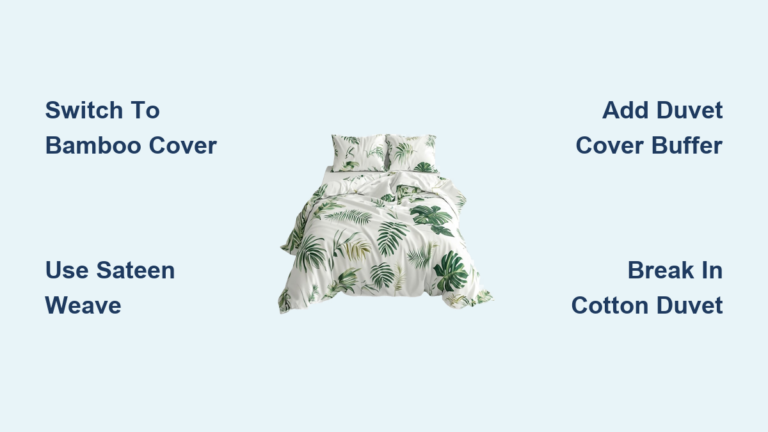
- Swap heavy down inserts for cotton or bamboo duvets.
- Use breathable linen or percale sheets.
- Fold the duvet down or replace it with a lightweight quilt.
- Add airy textures like seersucker or waffle weave.
Cozy Up for Fall and Winter
- Switch to a down or down-alternative insert for warmth.
- Layer a flannel sheet or quilt under the duvet.
- Add velvet or corduroy pillows and a chunky knit throw.
- Use sateen or flannel sheets for a warmer feel.
Maintain Your Styled Bed Daily
A beautiful bed is easier to keep than you think, once you get into the habit.
Make the Bed Every Morning
It takes less than 2 minutes and sets a positive tone for the day. The routine pays off in a calmer, more organized bedroom.
Fluff and Shake Regularly
- Shake out the duvet daily to redistribute filling and maintain loft.
- Fluff pillows to keep them full and inviting.
Wash Strategically
- White linens: Bleach-safe for bright, fresh results.
- Linen: Naturally stain- and odor-resistant; wash less frequently.
- Duvet covers: Wash weekly; use gentle cycles and low heat drying.
Replace Low-Quality Fills
Polyester inserts and pillow fills clump and flatten. Invest in down or premium down-alternative for long-term shape and comfort.
Avoid These Common Mistakes
Even small errors can undermine your styling efforts.
Ill-Fitting Sheets
Sheets that slip off look messy. Always measure your mattress plus topper and buy deep-pocket sheets accordingly.
Skip the Mattress Topper
A flat, worn mattress can’t support a luxurious look. A topper adds comfort and visual volume.
Use Only One Texture
All-cotton or all-linen beds can feel flat. Introduce contrast with quilts, knits, or woven throws.
Overdo the Pillows
Too many pillows make the bed impractical. Aim for balance where style meets sleepability.
Show Zippers and Unfastened Buttons
Always hide duvet cover zippers and fasten sham buttons. A polished look comes from attention to detail.
Frequently Asked Questions About How to Style a Duvet
What is the difference between a duvet and a comforter?
A duvet is an insert placed inside a removable cover, allowing for easy style changes and washing. A comforter is a single stitched piece with filling attached directly to the fabric. Duvets offer more design flexibility and are preferred for master bedrooms.
How do I make my duvet look fuller and fluffier?
Use an insert one size larger than your cover to create an overstuffed look. You can also try the double duvet method, layering a lightweight duvet underneath and a decorative one on top for added volume without extra heat.
How many pillows should I put on a queen bed?
For a queen bed, aim for 5 to 7 pillows total. A balanced arrangement includes 2 Euro shams, 2 standard shams, 1 lumbar pillow, and 2 accent pillows. Odd numbers tend to look more visually appealing.
Should I use a top sheet when styling a duvet?
Yes, a top sheet enhances the bed’s appearance and protects your duvet from body oils and dirt. Use hospital corners to keep it tight and wrinkle-free, and place the decorative edge facing down so it shows when folded over the duvet.
What is the Scandinavian sleep method?
The Scandinavian sleep method uses two twin-size duvets side-by-side on a shared bed. This prevents partners from tugging at the covers during the night and creates a symmetrical, easy-to-style appearance.
How do I keep my styled bed looking good every day?
Make the bed each morning, fluff pillows and shake out the duvet daily to redistribute filling, and wash duvet covers weekly. Store decorative pillows in a basket or bench at night to keep them in good shape and your bed functional for sleep.
Final Thoughts on Mastering Duvet Styling
Styling a duvet is about creating a bed that feels intentional, comfortable, and uniquely yours. Start with a solid foundation using the right topper and fitted sheets, then layer your duvet with volume-boosting techniques like the double duvet method or oversized inserts. Arrange pillows in odd numbers from back to front, and finish with textural accents like throws and trays that add depth and personality.
Your bed is the focal point of your bedroom, and small changes make a big impact. Pick one technique from this guide, try it today, and build from there. Within a week, you’ll have a bed that looks professionally styled and feels like a true retreat every single night.