
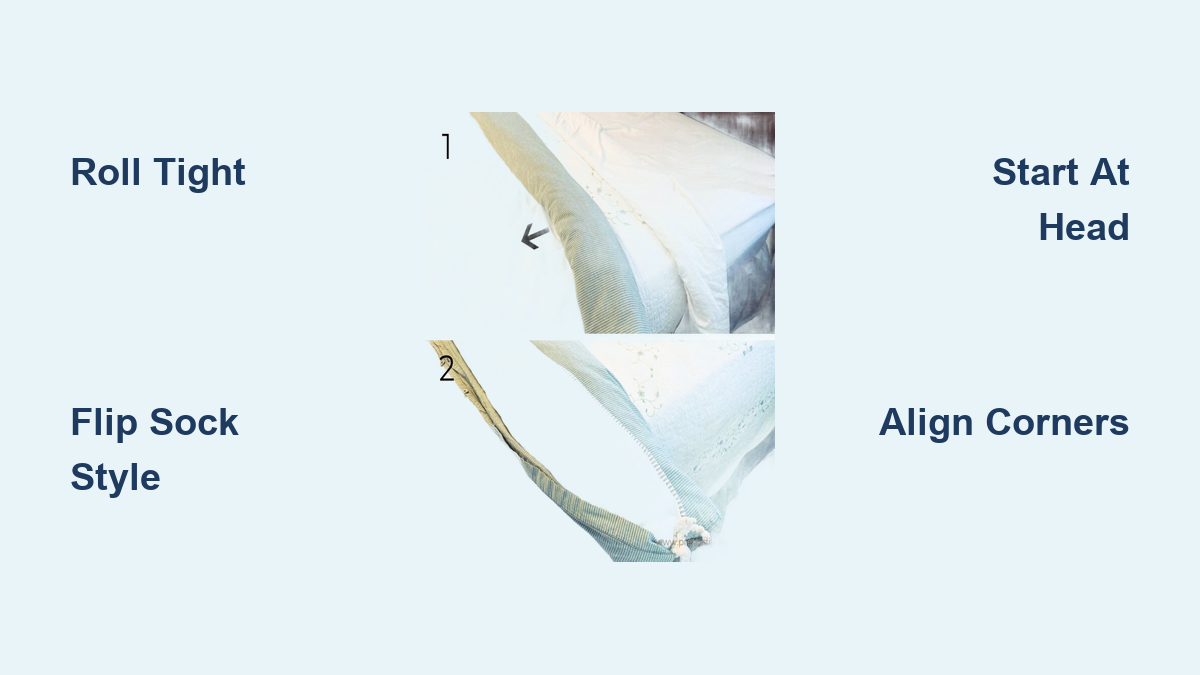
How to Do the Burrito Duvet Method
Ever wrestled with a duvet cover, arms buried deep inside, only to find one corner still empty and the whole thing lopsided? You are not alone. The burrito duvet method turns that frustrating chore into a quick solo task. No more climbing onto the bed, no more guessing if the corners are aligned. This technique, also known as the California Roll, uses a simple rolling and flipping motion to perfectly insert any duvet, from Twin to King, every single time.
By laying the cover inside out, aligning the insert, rolling them together like a burrito, and flipping the cover over the roll (like turning a sock inside out), you lock in alignment before the insert even fully enters the cover. The result is a smooth, evenly filled duvet with zero bunching. Whether you change sheets weekly or prep for guests, this method saves time, effort, and back strain. In this guide, you will learn the exact steps, avoid common mistakes, and discover why this is the only way you will ever dress a duvet again.
Prepare Your Bed and Align the Layers

Before rolling, set up for success. A clean, flat surface is essential. Clear off pillows, blankets, and mattress toppers. A firm mattress works best. Soft or saggy beds can make rolling difficult as the fabric sinks in.
Turn the Cover Inside Out
Lay the duvet cover completely inside out on the bed. Smooth it flat so no wrinkles or folds hide underneath. This ensures the insert slides in cleanly during the flip.
Position the Opening at the Foot
Orient the cover so the opening (zipper, buttons, or snaps) faces the foot of the bed. The closed end should be at the head. This direction is critical. Rolling starts at the head and ends at the foot where the opening waits for the flip.
Match the Insert to the Cover
Place the duvet insert on top of the inside-out cover. Align all four corners and edges precisely. If your cover has interior ties or loops, fasten them to the insert’s corners now. This prevents shifting after insertion and maintains perfect corner fill.
Pro Tip: Check your sizing. An insert that is too small will drift inside the cover. One that is too big resists rolling. For best results, match sizes exactly or use ties to secure minor mismatches.
Roll the Duvet from Head to Foot

With layers aligned, it is time to roll. This step locks everything in place and sets up the inversion.
Start at the Closed End
Begin at the head of the bed, which is the closed end of the cover. Grip both layers together and start rolling them toward the foot.
Roll Tight and Even
Keep the cylinder firm and consistent across the full width. Think of rolling a sleeping bag. It should be tight enough to hold shape but not so tight it strains. Avoid loose spots, as these cause slippage during the flip.
Visual Cue: The roll should stay elevated on the mattress, not sag into it. If your bed is soft, use your knees to stabilize the roll as you go.
Stop at the Opening
Roll until only the opening at the foot remains unrolled. You now have a compact “burrito” with the cover’s mouth ready for inversion.
Flip the Cover Over the Roll
This is the magic moment. The “sock flip” turns chaos into order.
Reach Inside the Opening
Stand at the foot of the bed. Reach into the duvet cover’s opening and grab the end of the rolled cylinder.
Pull the Cover Over the Roll
Now, pull the fabric over the roll, turning it right-side out as you go. Keep pulling until the entire roll is encased in the now right-side-out cover.
Analogy: It is like turning a sock inside out with a battery inside. Once you get the motion, it is effortless.
Secure the Closure
Once the cover is fully flipped and wrapped around the roll, fasten the zipper, buttons, or snaps. This locks the cover in place before unrolling.
Warning: Do not skip this. An unfastened end can unravel during unrolling, undoing all your work.
Unroll for Perfect Insertion
Now that the insert is inside the right-side-out cover, deploy it with confidence.
Unroll Toward the Head
Grasp the sealed roll and begin unrolling it back toward the head of the bed. As it unfurls, the duvet insert slides smoothly into place.
Shake to Distribute the Fill
Once fully unrolled, give the duvet a few firm shakes. This fluffs the down or fiberfill and ensures even distribution from corner to corner.
Adjust the Corners if Needed
Check each corner for fullness. If your cover lacks ties, reach in and tug the insert to fill any gaps. With ties secured earlier, this step is often unnecessary.
Time Saver: Once learned, this entire process takes 90 seconds to 2 minutes, which is faster than most laundry cycles.
Fix Common Rolling Mistakes
Even with clear steps, small errors can derail the burrito method. Here is how to spot and solve them.
Loose Rolling Causes Slippage
- Symptom: Fabric bunches or shifts during the flip.
- Fix: Roll tighter. Use both hands to maintain even pressure across the width. A firm roll holds its shape and prevents misalignment.
Wrong Start Point Blocks the Flip
- Symptom: You reach the end and cannot find the opening to flip.
- Fix: Confirm the cover opening is at the foot and you started rolling at the head. Re-lay the layers if needed.
Can Not Visualize the Flip?
- Solution: Practice with a pillowcase first. Roll a towel inside an inverted pillowcase, then flip it. The motion is identical, just smaller.
Expert Note: Watch a 30-second video if you are stuck. The “sock flip” is easier to see than describe.
Choose the Right Size and Use Ties
Perfect insertion starts before you even unroll the duvet.
Match Insert to Cover Size
- Too Small: Insert shifts, leaving cold corners.
- Too Big: Resists rolling and creates lumps.
- Ideal: Insert and cover are the same size. Use ties to stabilize minor mismatches.
Use Interior Ties for Stability
Ties at all four corners (and midpoints) keep the insert locked in place.
- With Ties: Insert stays put for weeks.
- Without Ties: May shift after a few sleeps.
DIY Fix: Add ties to a tie-less cover in 15 minutes with needle and thread. Sew loops near each corner to anchor the insert.
Maintain Alignment Long-Term
The burrito method gets it right on day one. Here is how to keep it that way.
Wash Using the Reverse Burrito
To remove for cleaning:
1. Unzip the cover.
2. Roll the whole assembly from head to foot.
3. Reach inside the opening and pull the cover off the roll (reverse flip).
4. Unroll and wash separately.
Bonus: This method also reduces wear on seams compared to aggressive stuffing.
Protect Fill Integrity
Traditional stuffing twists and compresses fill, especially down. The burrito method avoids deep tugging, preserving loft and warmth over time.
Prevent Cold Spots
Uneven fill creates hot and cold zones that disrupt sleep. By ensuring full corner-to-corner coverage, this method supports consistent thermal regulation all night.
Sleep Science Insight: Even insulation reduces night waking caused by temperature shifts, improving overall sleep continuity.
Why This Beats Traditional Stuffing
Forget the old way. The burrito duvet method wins on every measure.
Solo-Friendly for All Sizes
King duvet? No problem. The rolling action eliminates the need for a second person. Traditional stuffing often requires two people for Queen and up. This method is designed for one.
Less Physical Effort
No climbing, reaching, or wrestling. Just roll, flip, unroll. Users report staying cool and calm, with no more sweating through the chore.
Consistent, Reliable Results
Once mastered, every insertion is identical. No more guessing if the corners are full. The process builds muscle memory fast. Most users are proficient after 2 to 3 tries.
Faster Than Folding Sheets
At 90 seconds, it is quicker than folding a fitted sheet. And unlike sheet folding, the results are instantly visible and satisfying.
Frequently Asked Questions About the Burrito Duvet Method
How long does the burrito duvet method take once you learn it?
Once muscle memory is established (usually after 3 to 4 uses), the burrito duvet method takes 90 seconds to 2 minutes for any duvet size, from Twin to King. Your first attempt may take 3 to 4 minutes while mastering the “sock flip” motion.
Can one person use the burrito method on a King-size duvet?
Yes. The burrito method is fully viable for one person on all standard sizes, including King and California King. Larger sizes create a heavier roll but follow the exact same mechanical process, so no helper is needed.
What if my duvet cover does not have interior ties?
You can still use the burrito method without ties, but the insert may shift after a few sleeps. For best results, add ties yourself by sewing loops near each corner and midpoint. This retrofit takes about 15 minutes and locks the insert in place long-term.
Does the burrito method work on soft or pillow-top mattresses?
It works best on firm, flat mattresses. Soft, saggy, or deep pillow-top mattresses can cause the roll to sink, making the rolling and flipping steps harder. If your bed is soft, use your knees to stabilize the roll as you work.
What is the difference between the burrito method and the California Roll?
They are the exact same technique with different names. “Burrito method” references the cylindrical rolling action, while “California Roll” is a regional nickname. The procedural steps (inside-out lay, place insert, roll, flip, unroll) are identical.
Key Takeaways for Mastering the Burrito Duvet Method
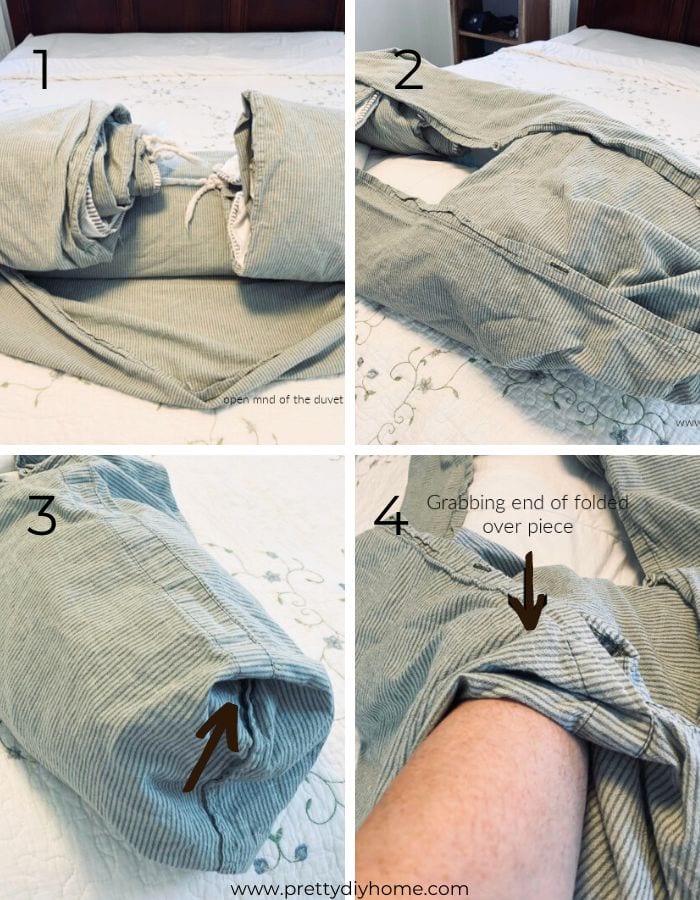
The burrito duvet method replaces wrestling with rolling. By aligning corners first, rolling tightly, and executing the “sock flip,” you get a perfectly dressed duvet in under two minutes. It works solo on any size, prevents cold spots through even fill distribution, and protects your insert’s loft over time.
Your next step: grab your duvet and cover, clear the bed, and try the roll-and-flip tonight. One practice run on a pillowcase can build the confidence you need for the real thing.