
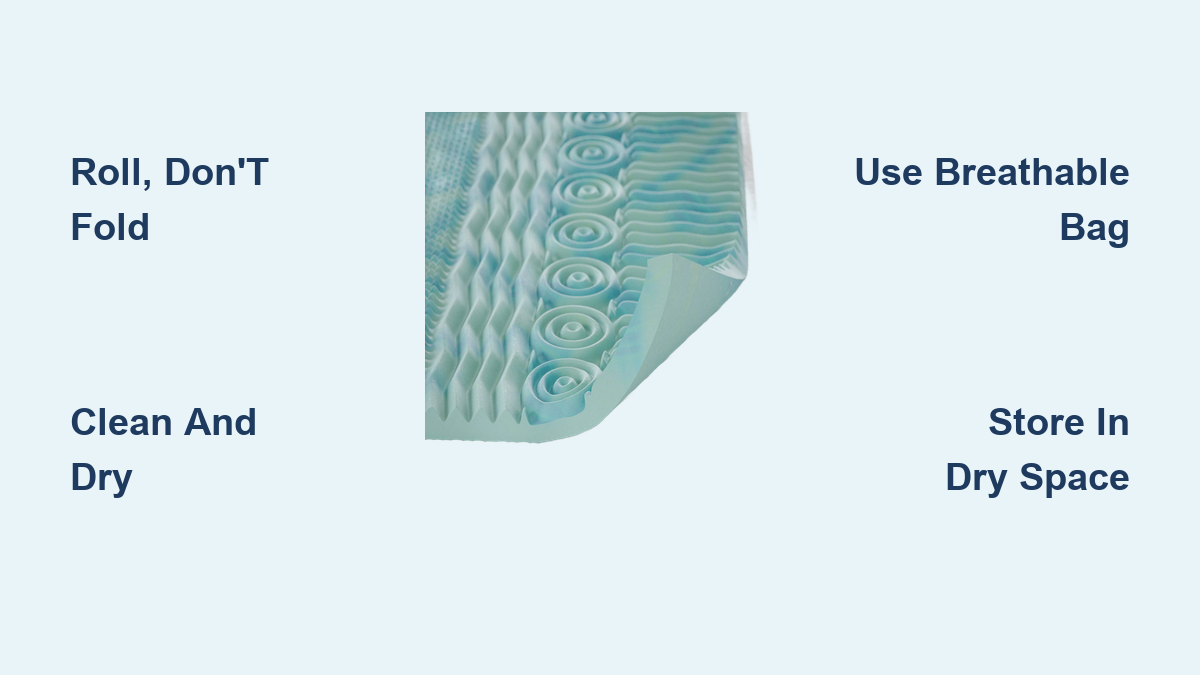
How to Store a Foam Mattress Topper
You invested in a foam mattress topper for better sleep, so when storage becomes necessary, protecting that investment matters. How to store a foam mattress topper the right way determines whether it stays fresh and springy or becomes permanently damaged by mold, odors, and deep creases. Foam toppers, especially memory foam and latex, are sensitive to heat, moisture, and compression. This guide covers every critical step, from cleaning and drying to rolling techniques, breathable packaging, and selecting the ideal storage environment.
Roll, Don’t Fold the Topper

Folding a foam mattress topper creates sharp creases that compress the open-cell structure beyond recovery. Memory foam is particularly vulnerable because its viscoelastic properties make it slow to rebound from deep indentations. A fold left for weeks or months can develop into a permanent crack. Latex foam handles bending better but still risks damage from sharp folds.
Why Folding Damages Foam
Folding compresses foam cells at sharp angles, breaking the internal structure. Once damaged, these areas never fully recover, leaving permanent soft spots or cracks that compromise comfort and support.
How to Roll Properly
Start at one end and roll the topper tightly but gently, similar to rolling a yoga mat. For king or queen sizes, recruit a second person to maintain even pressure. Avoid over-tightening, which crushes air pockets and delays rebound. Secure the roll with soft fabric straps or cloth ties, never zip ties or wire that can cut into the foam.
Roll the topper in the same direction each time to minimize stress on different areas.
Clean and Dry Before Storage
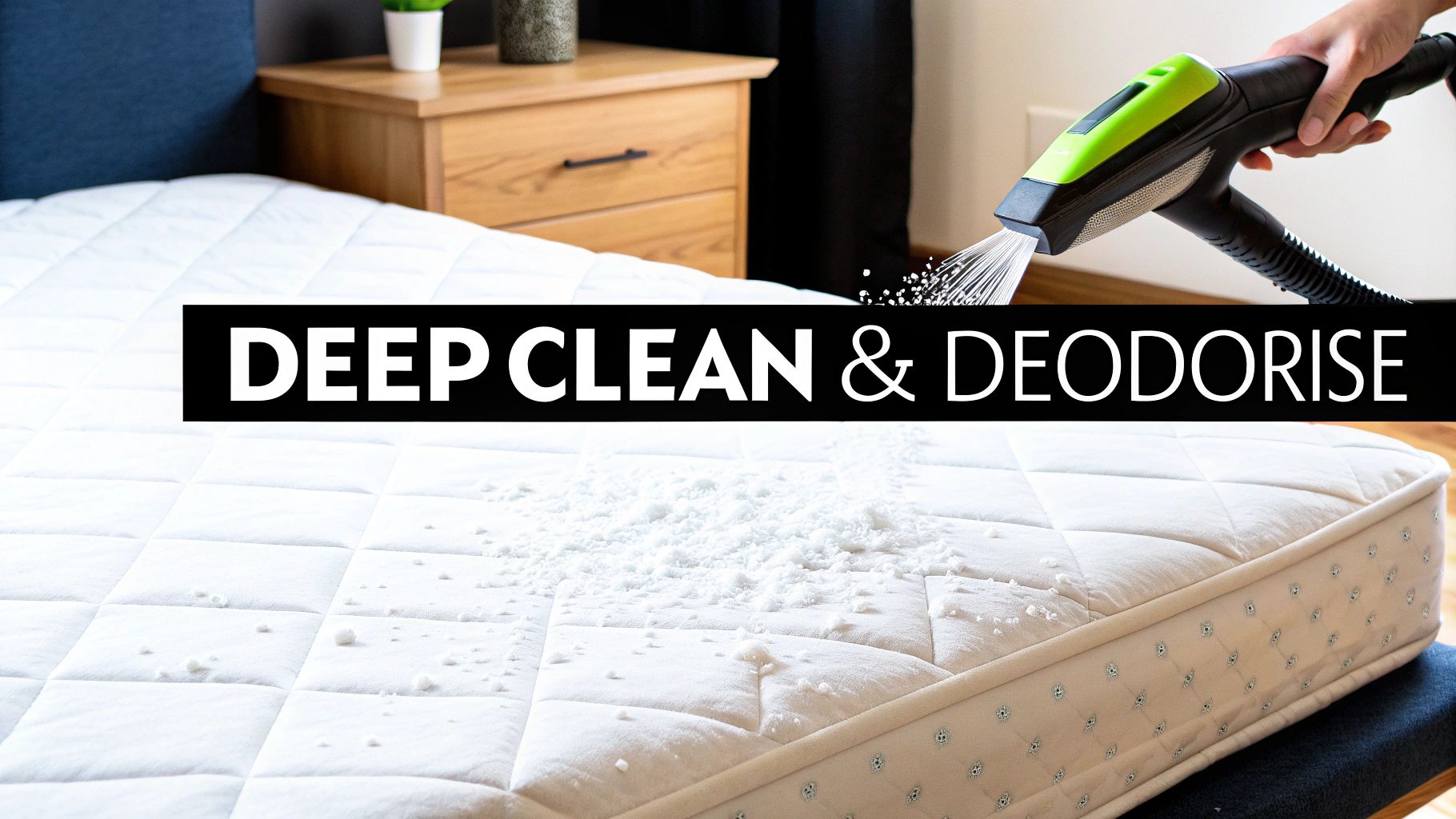
Dust, sweat, skin cells, and oils accumulate on your topper during use. Storing it without cleaning allows these contaminants to degrade the foam and attract pests. Even worse, trapped moisture guarantees mold growth, often within days and usually irreversible.
Vacuum and Spot-Clean Thoroughly
Vacuum the entire surface using an upholstery attachment to remove dust and allergens. For stains, mix a few drops of mild dish soap with water and dab the area with a clean cloth. Never soak or saturate foam, as excess moisture gets trapped inside.
Air-Dry Completely
Let the topper air-dry for 24 to 48 hours in a well-ventilated room away from direct sunlight. UV rays degrade foam, and heat can warp its structure. Flip the topper halfway through drying to ensure both sides release moisture evenly. Speed up the process with a fan on low or a dehumidifier nearby.
Warning: Storing even slightly damp foam guarantees mold growth, usually within days and irreversible.
Deodorize with Baking Soda
After cleaning memory foam, sprinkle baking soda over the surface. Let it sit for 2 to 4 hours to absorb odors, then vacuum thoroughly. This step is especially helpful for frequently used toppers or those shared by multiple people.
Choose the Right Storage Bag
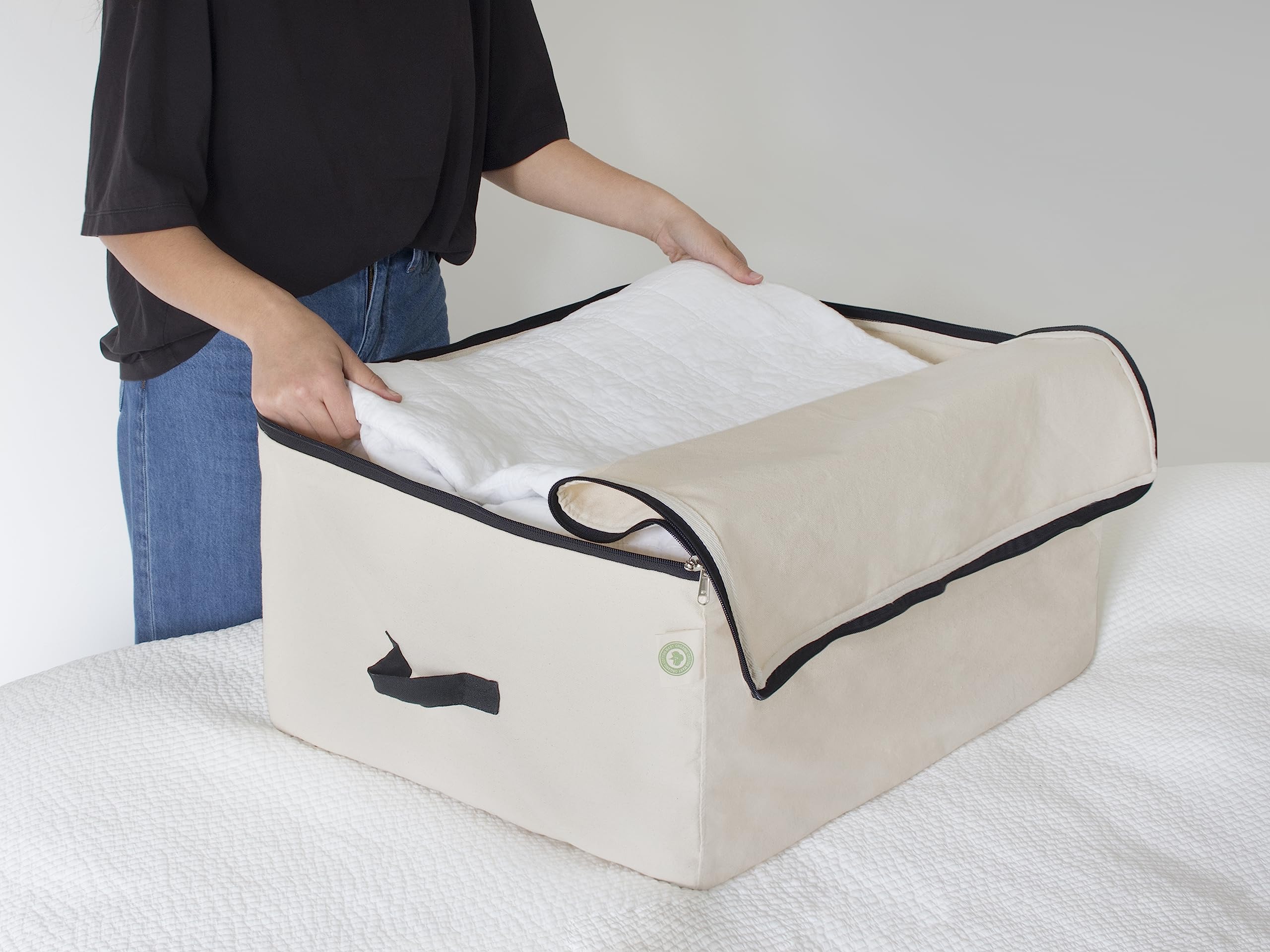
The right packaging protects against dust, pests, and moisture while allowing enough airflow to prevent mold. Using the wrong bag can undo all your cleaning efforts.
Use Breathable Materials
Wrap the rolled topper in breathable fabric like cotton, canvas, or the original packaging. Clean bed sheets work in a pinch. These materials allow airflow while shielding against dust and pests.
Avoid Airtight Plastic Long-Term
Plastic garbage bags trap moisture and restrict airflow, creating ideal conditions for mold. If using plastic, leave the top open for ventilation and store only in dry environments. Never seal a foam topper in plastic for months at a time.
Vacuum-Seal Only for Short-Term
Vacuum storage bags are useful for transport or temporary space-saving. Roll the topper, place it in a large storage bag, and use a vacuum to remove air. Limit vacuum compression to under four weeks, as prolonged pressure permanently damages memory foam resilience.
After vacuum removal, let the topper expand fully before use. This can take up to 48 hours.
Secure Without Over-Compressing
Proper securing maintains the rolled shape without causing indentations or crushing the foam structure.
Tie with Soft Straps
Secure the rolled topper with fabric straps, loose rope, or stretchable tie-downs. These keep it compact without crushing the foam. Avoid elastic bands or zip ties, which dig into the material and cause permanent indentations.
Do Not Stack Heavy Items
Even when rolled, never place books, boxes, or furniture on top of your stored topper. Constant pressure prevents the foam from recovering and leads to permanent flattening.
Store in a Climate-Controlled Space

The storage environment determines whether your topper survives intact or degrades. Foam responds poorly to temperature extremes and moisture.
Ideal Temperature and Humidity
Keep storage areas between 50°F and 75°F with humidity below 60%. Extreme heat softens foam, while extreme cold makes it brittle. High humidity encourages mold and mildew.
Best locations include spare rooms, linen closets, under-bed storage if flat, or high shelves in a dry basement.
Avoid Garages, Attics, and Trailers
These spaces are high-risk due to temperature swings, moisture, and pests. Attics can exceed 100°F, warping foam. Garages expose toppers to humidity, rodents, and floor moisture. Campers and trailers are problematic unless climate-controlled, with one user reporting mildew after winter storage.
In dry, cold climates like Alaska, short-term trailer storage may work. But in humid or temperate zones, bringing items indoors is safer.
Elevate Off the Floor
If storing in a basement or garage, place the topper on a wooden pallet or shelf. Concrete floors wick moisture, which the foam absorbs even through packaging.
Check and Rotate Every Few Months
Long-term storage requires periodic attention to prevent compression damage and catch problems early.
Prevent Compression Set
For storage exceeding three months, unroll the topper and re-roll it in the opposite direction every 60 to 90 days. This relieves compression stress and helps maintain foam integrity.
Inspect for Damage
Look for musty smells indicating early mold, visible mildew showing dark spots or fuzz, rodent droppings or chew marks, and permanent creases or slow rebound. Let the topper lie flat for a few hours during checks to allow full air circulation.
Retrieve and Recondition After Storage
Proper reclamation ensures your topper performs like new after storage.
Allow 24-48 Hours to Expand
After unrolling, let the topper rest flat on the bed for at least a day. Memory foam especially needs time to regain its shape and density. Off-gassing odors dissipate during this period.
Air Out in a Well-Ventilated Room
Open windows or use a fan to speed up odor removal. Avoid heaters or hairdryers, as direct heat damages foam.
If vacuum-compressed, expansion may take longer, up to two days.
Follow Material-Specific Tips
Different foam types require different care approaches.
Memory Foam: Handle with Care
Never fold memory foam, as permanent damage is likely. Avoid heat and moisture by storing indoors. Limit vacuum storage to no more than a few weeks.
Latex Foam: More Resilient But Not Invincible
Latex handles rolling better than memory foam and is naturally mold-resistant, but still requires full drying. It remains vulnerable to compression and pests if stored poorly.
Hybrid Foam Toppers
Hybrids contain memory foam plus gel, fiber, or coils. Follow memory foam rules: roll, don’t fold. Extra care is needed if layers are prone to separation.
Thick or heavy toppers over 4 inches may be harder to roll. Consider flat storage in a clean, protected indoor space instead.
Real-World User Lessons
Learning from others’ experiences helps you avoid common mistakes.
Success: Dry Basement with Ventilation
One user in Upstate New York rolls their topper, places it in a slightly open garbage bag, and stores it in a dry basement with no issues for years. The open top allows airflow, preventing moisture buildup.
Failure: Winter Camper Storage
Another user stored a topper in a camper over winter and returned to find mildew and a musty smell. The topper had to be discarded. Cold alone is not the problem; trapped moisture is.
Rodent Risk: Protect from Pests
Mice and rats chew through foam for nesting material. One user avoids leaving any soft goods in trailers. Bringing items indoors is the safest approach, though fabric softener sheets are sometimes used as a deterrent.
Frequently Asked Questions About Storing a Foam Mattress Topper
Can I fold a foam mattress topper for storage?
No. Folding creates sharp creases that can become permanent cracks in the foam’s cellular structure. Always roll instead of fold, regardless of how inconvenient the size.
How long can I store a foam topper in a vacuum bag?
Limit vacuum storage to under four weeks. Prolonged compression damages memory foam’s resilience and can cause permanent deformation.
What happens if I store a damp foam topper?
Storing a damp topper guarantees mold growth, often within days. The mold is usually irreversible, and the topper must be discarded. Always ensure completely dry before storage.
Can I store my foam topper in a garage or attic?
Avoid these locations. Garages and attics experience temperature extremes, humidity fluctuations, and pest access. Store indoors in a climate-controlled space instead.
How often should I check on a stored foam topper?
Check every 60 to 90 days. Unroll and re-roll in the opposite direction to relieve compression stress. Inspect for musty smells, visible mold, or pest activity.
Will my foam topper smell after storage?
Some off-gassing is normal. Let the topper rest flat in a well-ventilated room for 24 to 48 hours before use. Any odors will dissipate during this time.
Key Takeaways for Storing Your Foam Mattress Topper
Proper storage extends a foam mattress topper’s life to 5 to 10 years. Always roll instead of folding, clean and fully dry before storage, and use breathable wraps like cotton or canvas. Choose a cool, dry, climate-controlled space, and never store in garages, attics, or outdoor trailers without climate control. Elevate off concrete floors and avoid stacking heavy items on top. Check periodically for damage, and allow 24 to 48 hours for expansion after retrieval. By following these steps, your foam topper bounces back ready to deliver restful sleep, just like new.