How to Protect a Mattress Topper: Easy Tips
A mattress topper can completely transform your sleep, adding plush comfort, cooling relief, or firm support. But without proper protection, it quickly deteriorates from spills, sweat, allergens, and everyday wear. Learning how to protect a mattress topper is essential for keeping it hygienic, comfortable, and long-lasting. This guide covers the correct layering order, anti-slip solutions, cleaning techniques by material type, and storage tips that can extend your topper’s life by years.
Correct Layering Order for Maximum Protection

The way you layer your bedding directly affects how well your topper performs and stays protected. Place your mattress first, then add the topper directly on top. The waterproof protector goes over the topper, and your fitted sheet finishes the stack. This configuration shields the topper from liquids and allergens while preventing slippage. Never place a protector under the topper, as this traps heat, reduces breathability, and may void your warranty.
For households with children, pets, or medical needs, use double protection. Add a zippered mattress encasement under the topper to seal the base mattress, then layer a removable washable protector over the topper. This method stops fluids, bed bugs, and dust mites while keeping both components stable and clean.
Use a Waterproof Mattress Protector
A high-quality waterproof protector is the single most effective defense for any mattress topper. Look for one that is waterproof but breathable to block spills without trapping heat. Choose fitted corners with deep pockets designed for thick toppers between 15 and 22 inches. OEKO-TEX certification ensures the protector is free from harmful chemicals, while hypoallergenic and quiet materials protect sensitive sleepers without crinkling sounds.
The right protector prevents stains, odors, and microbial growth while reducing slippage between layers. It can extend your topper’s life by two to three years and makes cleaning simple. Just wash the protector monthly. Replace your protector every two to three years or when seams start weakening.
Stop Topper Slippage with These Methods

A sliding topper ruins comfort and accelerates wear. Try these proven stabilization techniques to keep your topper secure.
Use non-slip grip pads between the mattress and topper. Textured rubber or mesh mats increase friction, especially on smooth or vinyl-covered bases. Choose deep-pocket fitted sheets with 15 to 22 inch pockets and strong elastic. Bamboo and microfiber materials grip better than silk or satin.
Elastic sheet straps or suspenders work well for restless sleepers. These straps stretch across the bed and tuck under the mattress to lock everything in place. For a simple DIY fix, large safety pins can anchor corners, though avoid deep punctures that could damage the foam or void your warranty. The cotton layer trick involves placing a cotton fitted sheet on the mattress first, then the topper, then another sheet. Cotton-to-cotton contact creates natural friction that prevents movement.
Premium toppers sometimes include built-in anchors like elastic corner straps, non-skid bottom fabric, or zippered encasements that eliminate the need for extra accessories.
Clean and Maintain Your Topper Regularly
Dirt, sweat, and allergens build up quickly. Follow a consistent cleaning schedule to keep your topper fresh and hygienic.
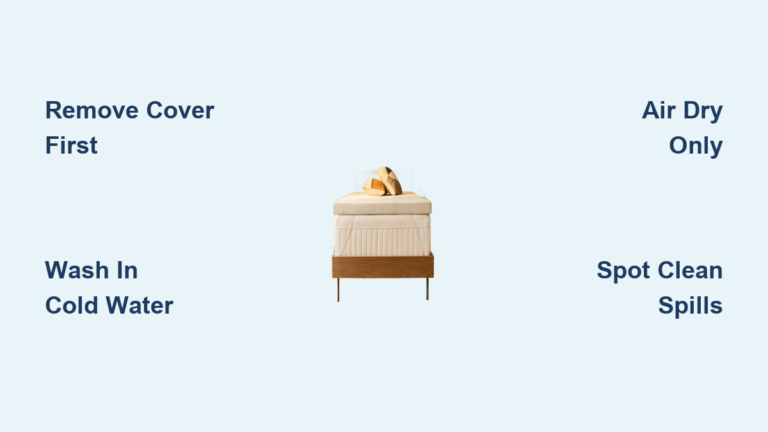
For immediate spill response, blot the area with a dry cloth to absorb liquids. Never rub. Spot clean with a damp cloth and mild detergent, then air dry completely for 24 to 48 hours before remaking the bed. Never soak foam cores, as water causes breakdown and mold.
For deep cleaning, use baking soda every three to six months to remove odors. Vacuum the surface every one to three months to remove dust, hair, and allergens. Steam cleaning works once a year if your topper is labeled steam-safe. Place your topper in sunlight for three to six hours for natural disinfection, but limit sun exposure to six hours maximum to avoid UV damage.
Different materials require different care. Memory foam needs spot cleaning only and 24 to 48 hours of air drying. Latex tolerates light soap and water but must dry away from sun. Down and down-alternative toppers can be hand-washed if removable and air dried. Wool naturally resists odors and needs only monthly airing plus professional cleaning. Gel-infused foam requires the same care as memory foam but must avoid heat that can separate the gel.
Rotate and Flip for Even Wear
Prevent body impressions and sagging by rotating your topper regularly. Turn it 180 degrees head to foot every three to six months to spread compression evenly, especially if you sleep in the same spot nightly.
Flip your topper only if it is reversible. Some models feature dual sides with different firmness levels. Check the manufacturer label before flipping, as most memory foam toppers are not designed to be flipped.
Control Your Bedroom Environment
Heat, humidity, and poor airflow significantly shorten your topper’s lifespan. Maintain humidity between 30 and 50 percent using a dehumidifier if needed. Keep bedroom temperatures between 65 and 72 degrees Fahrenheit. Allow space between the bed and wall for air circulation.
Avoid direct sunlight, heaters, and radiators, as these degrade foam and weaken adhesives. Keep toppers away from damp basements or attics that promote mold and mildew. High humidity invites dust mites and mold, which are common allergy triggers.
Store Properly When Not in Use
Seasonal or backup toppers need careful storage to avoid permanent damage. Always dry completely before storing. Store flat or vertically supported to prevent creasing. Use breathable bags made of cotton, canvas, or mesh rather than plastic. Elevate storage containers off floors using pallets to avoid moisture.
Memory foam must be stored flat and never folded. Allow 24 hours for it to expand after compression. Latex can be rolled loosely but must avoid sun and air out before reuse. Down toppers should be rolled, not folded, stored in a cotton bag, and fluffed occasionally. Wool needs to air out first and stay dry throughout storage. Gel-infused foam follows the same rules as memory foam.
Inspect stored toppers every three to six months for pests or mold. Air them out briefly if stored over three months. Use cedar blocks for natural pest control instead of toxic mothballs.
Prevent Structural Damage
Even small habits can degrade your topper over time. Use a supportive base like a solid platform bed, slatted frame with slats no more than three inches apart, or an adjustable bed. Avoid sagging box springs or weak frames that stress the topper and cause premature breakdown.
Avoid jumping on the bed, as foam cannot recover from repeated impact. Do not sit on edges, which compresses foam beyond rebound, especially in low-density models.
Follow Warranty Guidelines
Many warranties are voided by improper care. Common warranty killers include using bleach, ammonia, or harsh cleaners, steam cleaning non-approved models, removing non-removable covers, folding or rolling memory foam, and pet damage or water exposure.
Protect your investment by registering the product, keeping your receipt and packaging, and following all care instructions exactly as specified.
Know When to Replace Your Topper
Even with perfect care, toppers eventually wear out. Signs it is time for a new one include visible sagging or indentations deeper than one to two inches, torn or frayed covers, persistent odors after cleaning, returning allergy symptoms from dust mites or mold, and loss of support or comfort where the topper no longer cushions hips or shoulders.
The average lifespan is three to five years depending on use, body weight, and maintenance quality.
Frequently Asked Questions About Protecting a Mattress Topper
Should a mattress protector go over or under a mattress topper?
Always place the protector over the topper. This configuration shields both the topper and underlying mattress from spills, sweat, and allergens while allowing the topper to deliver its intended comfort and support.
How often should I clean my mattress topper?
Spot clean spills immediately. Vacuum the surface every one to three months. Perform deep cleaning with baking soda, steam, or sunlight every three to six months. Air out the topper monthly to prevent mustiness.
Can I machine wash my mattress topper?
Only certain types can be machine washed. Memory foam and latex toppers require spot cleaning only. Down and down-alternative toppers may be hand-washed if the cover is removable. Many hybrid models have zip-off covers that are machine washable in cold water on a gentle cycle.
How do I keep my mattress topper from sliding?
Use a non-slip grip pad between the mattress and topper. Choose deep-pocket fitted sheets with strong elastic. Try elastic sheet straps or suspenders. The cotton layer trick of placing a cotton sheet on the mattress first, then the topper, then another sheet creates natural friction.
Does a mattress topper need sunlight exposure?
Limited sunlight exposure, about three to six hours, naturally disinfects and deodorizes toppers. However, avoid more than six hours of direct sunlight, as UV rays can degrade foam and fabric materials.
How long does a mattress topper last with proper care?
With proper protection, regular maintenance, and correct storage, a quality mattress topper typically lasts three to five years. Using a waterproof protector and rotating the topper regularly can extend this lifespan significantly.
Key Takeaways for Protecting Your Mattress Topper
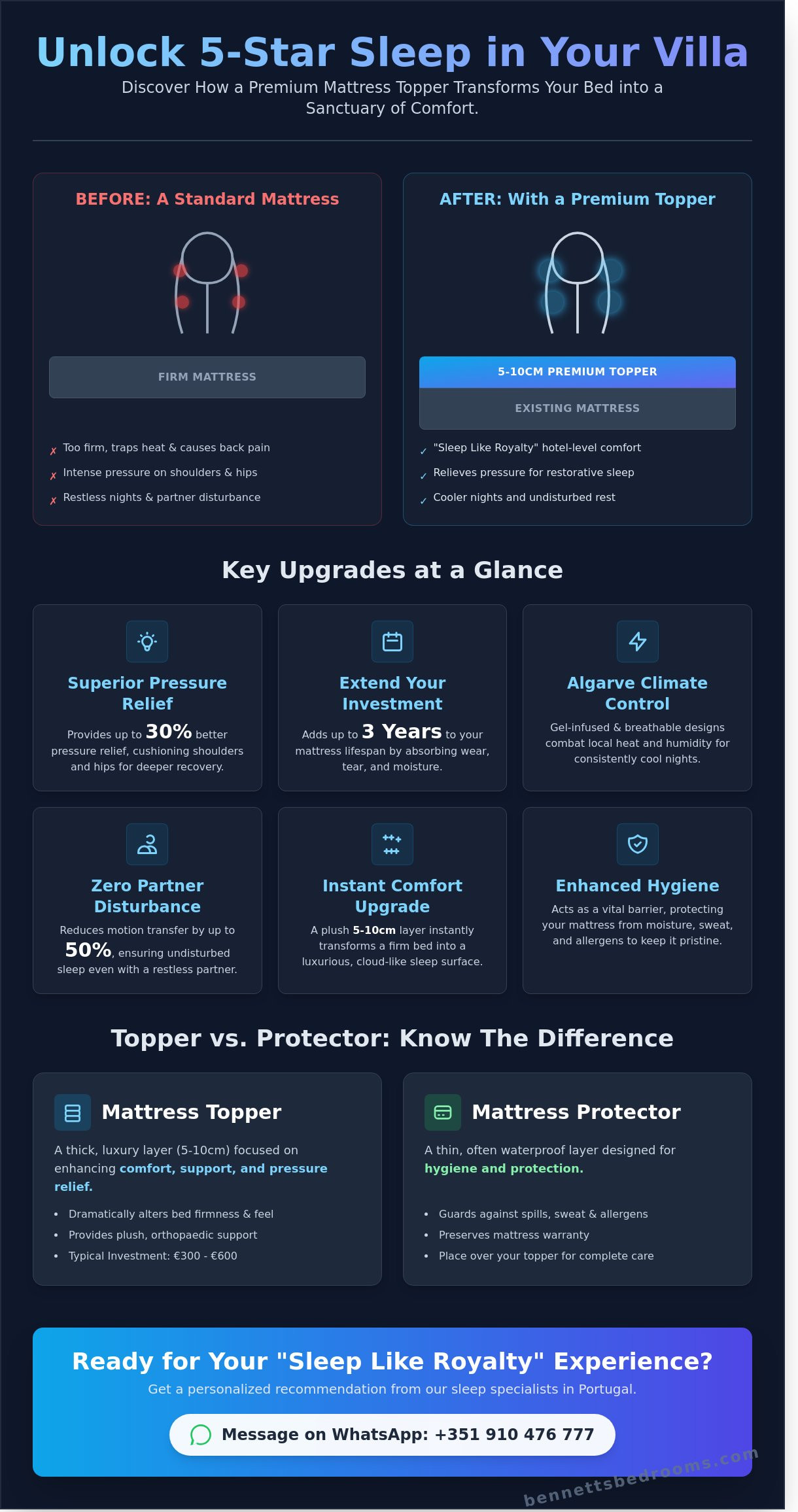
Protecting a mattress topper comes down to consistent, simple habits that preserve its comfort and hygiene. A breathable waterproof protector placed over the topper is the single most effective defense against spills, allergens, and daily wear. Pair this with regular rotation every three to six months, prompt spot cleaning when accidents happen, and proper storage in a cool, dry place when not in use. Control your bedroom environment by maintaining humidity below 50 percent and keeping the topper away from direct heat sources. By following these practices tailored to your specific topper material, you will maximize its lifespan, protect your investment, and enjoy better sleep for years to come.