
How to Change a Duet Cover: Quick Steps
Nothing ruins a fresh bedding moment faster than a duvet cover that ends up inside out, lumpy, or twisted. If you’ve ever wrestled your comforter into a cover and lost, you’re in good company. The good news? The fix is simpler than you think, and it starts with one game-changing step: flipping the cover inside out before you begin.
The difference between chaos and calm comes down to technique. Once you learn the right approach, you can change a duvet cover in under five minutes, solo, without breaking a sweat. This guide walks you through four proven methods, how to stop your insert from shifting, and quick fixes for the most common frustrations.
Set Up Your Duvet Cover the Right Way
Smart prep turns a wrestling match into a smooth process. Spend two minutes here, and the rest of the job practically does itself.
Flip the Cover Inside Out First
This is the golden rule. Turn your duvet cover inside out before laying it on the bed. Skip this step, and every method below will fail. The inside-out position lets you invert the cover over the insert without ending up with twisted fabric.
Position the Opening Correctly
Place the cover’s opening at the foot of the bed for the Rolling and Traditional methods. For the Clip Method, the opening goes at the head of the bed. Getting this wrong means redoing the whole process.
Match Corners and Edges
Lay the duvet insert on top of the inside-out cover. Align all four corners and edges precisely. If your insert has a tag, position it at the head of the bed so it ends up hidden at the bottom interior of the cover once finished.
Check the Fit
Your duvet cover should be 1 to 2 inches (2.5–5 cm) larger than the insert. A cover that’s too small causes bunching. One that’s too big lets the insert slide around. Proper sizing keeps everything smooth and secure.
Method 1: The Rolling Method (Burrito Technique)
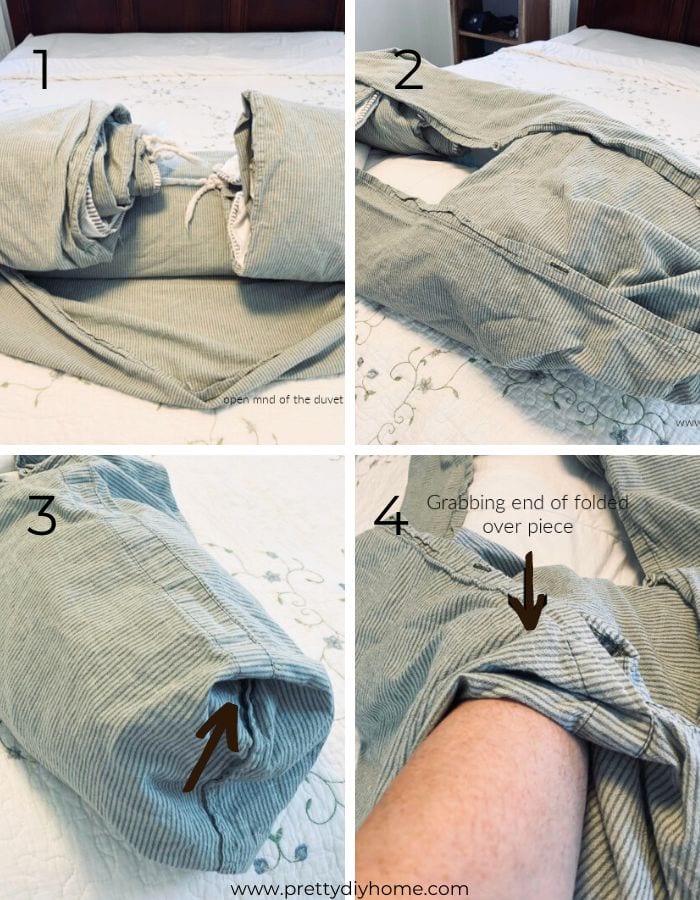
Best for solo users, king-sized duvets, or anyone who hates flinging heavy bedding around. This method uses rolling instead of shaking, giving you maximum control.
Roll Tightly from Head to Foot
Starting at the head of the bed, roll the insert and cover together toward the foot. Keep the roll tight and even, like a burrito. Working alone? Roll from the center outward. Have a helper? Both of you can roll from opposite sides at the same time.
Invert the Cover Over the Roll
Once you have a tight log at the foot of the bed, reach through the opening and grab the end of the roll. Pull the cover over it to flip it right-side out. Repeat for the other end if needed.
Unroll and Close
Slowly unroll the bundle back toward the head of the bed. The cover will fall into place around the insert. Zip, button, or tie the opening shut, then shake the duvet to fluff the filling evenly.
Pro Tip: If your cover has a partial opening (not full-width), go slowly when flipping. Work the fabric over the roll carefully to avoid snags or bunching.
Method 2: The Traditional Quick Method
Best for experienced users or lightweight inserts. This technique is fast but takes some upper-body coordination.
Grab the Top Corners Through the Opening
With the cover lying inside-out on top of the insert, reach through the foot opening. Find the top two corners of the insert through the fabric. Your hands should feel like they’re wearing mittens, gripping both cover and insert at once.
Flip and Shake
Lift the assembly and flip the cover right-side out over your arms. Then shake vigorously. Gravity pulls the cover down, enveloping the insert.
Adjust and Close
If the bottom corners don’t settle into place, pull them down by hand. Close the opening and smooth out wrinkles.
Warning: This method often fails with heavy or oversized duvets. If you find yourself struggling, switch to the Rolling Method instead.
Method 3: The Gravity Method
A streamlined version of the Traditional Method, designed for speed and minimal effort.
Fold and Position the Cover
Lay the duvet cover folded lengthwise on the bed, inside out. This reduces bulk and makes corner access easier.
Grab Corners and Drop
Reach into the cover opening and grab the two far top corners. Match them with the corresponding corners of the insert. Lift the assembly and let gravity pull the cover down.
Shake and Finish
Shake three to four times until the cover descends most of the way. Lay the duvet flat, tuck in the bottom ends, align the corners, and close the bottom edge.
Expert Note: Wash your cover inside out. When it comes out of the dryer, it’s already oriented correctly for this method. No extra flipping required.
Method 4: The Clip Method (No-Shake Technique)
Perfect for heavy duvets, mobility limitations, or anyone who wants a frustration-free change. You’ll need clips or strong elastics.
Start with the Opening at the Head
Lay the cover inside out on the bed with the zipper at the top (head) of the bed. Place the insert on top, aligned perfectly.
Pull and Clip the Top Corners
Reach through the top opening. Pinch the top-left corner of both cover and insert together, pull them through the opening, and clip them. Repeat for the top-right corner.
Pull and Clip the Bottom Corners
Reach all the way through the opening to the bottom-left corner. Pinch both layers, pull them through the top opening, and clip. Repeat for the bottom-right corner.
Deploy and Close
With all four corners clipped and pulled through the top, walk to each corner of the bed and pull outward. This draws the entire duvet through the cover smoothly. Remove the clips and zip the bottom edge shut.
Time-Saver: This method eliminates shaking, rolling, and flinging. It’s ideal for down-filled or winter-weight duvets that feel impossible to maneuver.
Secure the Insert to Prevent Shifting

A duvet that slides inside its cover looks messy and feels uncomfortable. Lock it in place with these strategies.
Use Built-In Fasteners
Many covers and inserts come with corner ties, buttons, or snaps.
- Ties: Tie fabric loops together in a secure knot or bow. Do this before rolling or flipping to prevent misalignment.
- Buttons or snaps: Align plastic or metal fasteners in each corner for a flatter profile.
Compatibility Check: If your cover has ties but the insert doesn’t (or vice versa), the system won’t work without modification.
Try Aftermarket Solutions
No built-in fasteners? These alternatives work well:
- Duvet clips: Reusable plastic or metal clamps that grip both layers at each corner.
- Safety pins: Use strong, closed safety pins to bind insert corners to the cover. Avoid cheap pins that can pop open.
- Hair elastics: A quick emergency fix. Less durable, but better than nothing.
Pro Tip: Always secure all four corners, not just two. Skipping corners leads to shifting.
Fix Common Duvet Cover Problems
Even with the right method, things can go sideways. Here’s how to troubleshoot fast.
The Insert Is Lumpy or Bunched
Cause: Poor sizing or uneven distribution during insertion.
Fix: Use the Rolling Method for even layering. After closing, shake the duvet vigorously from side to side and vertically. Fluff each corner to redistribute the filling.
The Duvet Slides Inside the Cover
Cause: No corner fasteners or loose ties.
Fix: Secure all four corners with ties, clips, or pins. After closing, grab one corner and shake. If you feel movement, re-secure the corners.
You Can’t Flip the Cover Over the Roll
Cause: Partial zipper or misaligned layers.
Fix: Roll more slowly to keep layers even. If the opening isn’t full-width, manipulate the fabric gently over the roll ends. Switch to the Clip Method if the problem persists.
You’re Struggling Alone with a King-Size Duvet
Cause: Too much fabric to manage solo.
Fix: Use the Rolling or Clip Method, both designed for solo use. Alternatively, change the duvet on the floor for more space and easier access.
Maintain Your Duvet System for Long-Term Use
Proper care keeps your bedding looking fresh and functioning well.
Wash the Cover Regularly, Not the Insert
The cover’s job is to protect the insert from sweat, oils, and dust. Wash the cover every 1–2 weeks. The insert only needs cleaning every 6–12 months, which preserves its loft and softness.
Store Duvets Properly
When switching seasons, store inserts in a breathable cotton bag. Avoid plastic, which traps moisture. Don’t compress down-filled inserts long-term; it damages the loft.
Inspect for Wear and Tear
Check ties, zippers, and snaps regularly. Repair loose threads or weak closures before they fail. A broken zipper can turn a 5-minute job into a 30-minute struggle.
Frequently Asked Questions About Changing a Duvet Cover
What is the easiest way to put a duvet cover on by yourself?
The Rolling Method (Burrito Technique) is the easiest solo method. You roll the insert and cover together, flip the cover over the roll, then unroll. No shaking or flinging required, making it ideal for heavy or king-sized duvets.
Why does my duvet bunch up inside the cover?
Bunching usually happens because the cover is too small or the insert isn’t secured at the corners. Make sure your cover is 1–2 inches larger than the insert, and always tie or clip all four corners before inserting.
How do you keep a duvet from sliding inside the cover?
Use built-in ties, buttons, or snaps if your set has them. If not, attach duvet clips, safety pins, or hair elastics at all four corners. Skipping corners is the most common reason inserts shift around.
Can you change a duvet cover without shaking it?
Yes. The Clip Method lets you pull the cover through the opening without any shaking. It’s perfect for heavy duvets or anyone with limited mobility who finds shaking difficult.
Should you wash a duvet cover inside out?
Yes. Washing inside out protects the fabric and means the cover comes out of the dryer already oriented correctly for the Rolling or Gravity methods. You skip the manual flipping step.
How often should you wash a duvet cover?
Wash the cover every 1–2 weeks to remove sweat, oils, and dust. The insert only needs washing every 6–12 months since the cover protects it from most dirt.
Key Takeaways for Changing a Duvet Cover Like a Pro

Changing a duvet cover doesn’t require strength or luck. It requires the right setup and technique. Start by flipping the cover inside out, align your corners precisely, and choose the method that fits your situation. The Rolling Method works best for solo users and heavy duvets. The Clip Method eliminates shaking entirely. The Traditional and Gravity Methods are faster for lightweight inserts.
Always secure all four corners with ties, clips, or pins to prevent shifting. Wash your cover regularly but your insert sparingly to extend its life. With these habits, you’ll cut your duvet-changing time down to minutes and never dread laundry day again.
Ready for a smoother bed-making routine? Pick your favorite method, grab your clips, and give it a try tonight.