
How to Get Coffee Stains Out of a Duvet
Spilled coffee on your duvet? The panic is real, but the stain doesn’t have to be permanent. Coffee contains tannins that bond quickly with fabric fibers, especially when exposed to heat, so your response time matters more than almost anything else. The good news is that with the right technique and a little patience, you can restore your bedding to its original state.
This guide covers proven methods for every duvet type, from washable cotton covers to delicate down inserts and vintage quilts. You’ll learn how to blot correctly, choose safe cleaners for each fabric, troubleshoot stubborn set-in stains, and avoid the common mistakes that make coffee stains permanent.
Immediate Response: Stop the Stain in the First 60 Seconds

Blot, Don’t Rub
Your first move sets the tone for everything that follows. Grab a clean, dry cloth or paper towel and press down firmly on the spill. Lift straight up, then repeat with a fresh section of cloth. Wiping or scrubbing forces coffee deeper into the fibers and spreads the stain outward, making removal much harder.
Remove and Isolate the Layers
Strip the duvet cover immediately to prevent the stain from transferring or setting. If the coffee soaked through to the insert, pull that out too and lay it flat. Place a dry towel underneath the affected area to absorb any liquid pooling beneath the fabric.
Flush With Cold Water Only
Run cold water through the back of the stain to push coffee out of the fibers rather than deeper in. Never use warm or hot water at this stage; heat causes tannins to bond permanently with fabric. Hold the fabric under a gentle stream or sponge it carefully from the reverse side.
Duvet Cover Cleaning Methods

Cold Soak With Vinegar and Dish Soap
This gentle combo works on cotton, linen, and synthetic covers, and it lifts most fresh coffee stains without damaging fibers.
- Mix 1 quart of warm water with ½ teaspoon of liquid dish soap and 1 tablespoon of white vinegar.
- Soak the stained area for 15 minutes.
- Rinse thoroughly with warm water.
- If a faint mark remains, dab with rubbing alcohol on a clean cloth, then rinse again.
- Machine wash in cold water with regular detergent.
The vinegar breaks down tannins while the dish soap lifts oils, making this duo both effective and fabric-safe.
Commercial Stain Remover Pretreatment
For quick action, spray a product like OxiClean MaxForce or Shout directly onto the stain. Let it sit for 5 to 10 minutes, then launder as usual. Always check the care label first to confirm compatibility.
Boiling Water Flush for Cotton and Linen
For tough, dried stains on white cotton or linen covers, this high-risk method can deliver high rewards.
- Stretch the stained area over a bowl and secure with a rubber band.
- Heat water to exactly 200°F (just below boiling).
- Pour the hot water from a height onto the stain, letting it flush through into the bowl.
Test on a hidden seam first. Near-boiling water can damage certain dyes and finishes.
Oxygen Bleach Soak
Ideal for white or colorfast covers with lingering discoloration.
- Dissolve 2 to 4 tablespoons of OxiClean per gallon of water.
- Soak the cover for 1 to 6 hours, depending on stain age.
- Machine wash with warm water and detergent, adding one scoop of OxiClean to the drum.
- Tumble dry on low heat.
Skip the fabric softener. It coats fibers, reduces absorbency, and traps odors.
Duvet Insert and Comforter Cleaning
Machine Washing Down or Synthetic Inserts
Inserts are bulky and prone to clumping, so handle them with care.
- Pre-treat by blotting the stain with a cloth soaked in OxiClean solution (2 tablespoons per gallon). Let it sit for 20 minutes.
- Wash in a large-capacity machine on a gentle cycle with warm water, mild detergent, and one scoop of oxygen bleach.
- Rinse thoroughly using the extra rinse option, or run a second cycle manually to remove all soap residue.
- Dry on low or medium heat, fluffing every 20 to 30 minutes to redistribute the filling and prevent wet clumps.
Skipping the fluffing step risks a damp core that breeds mildew.
Spot Cleaning Non-Washable Inserts
For inserts labeled “spot clean only” or too bulky for your machine:
- Spray an OxiClean stain remover directly onto the stain.
- Let it sit for 5 minutes on colors or 10 minutes on whites.
- Blot with a damp cloth to remove residue.
- Air dry completely, using a fan to speed up the process.
Avoid this method on wool, silk, leather, or dry-clean-only fabrics.
White Duvets and Quilts: Stronger Solutions
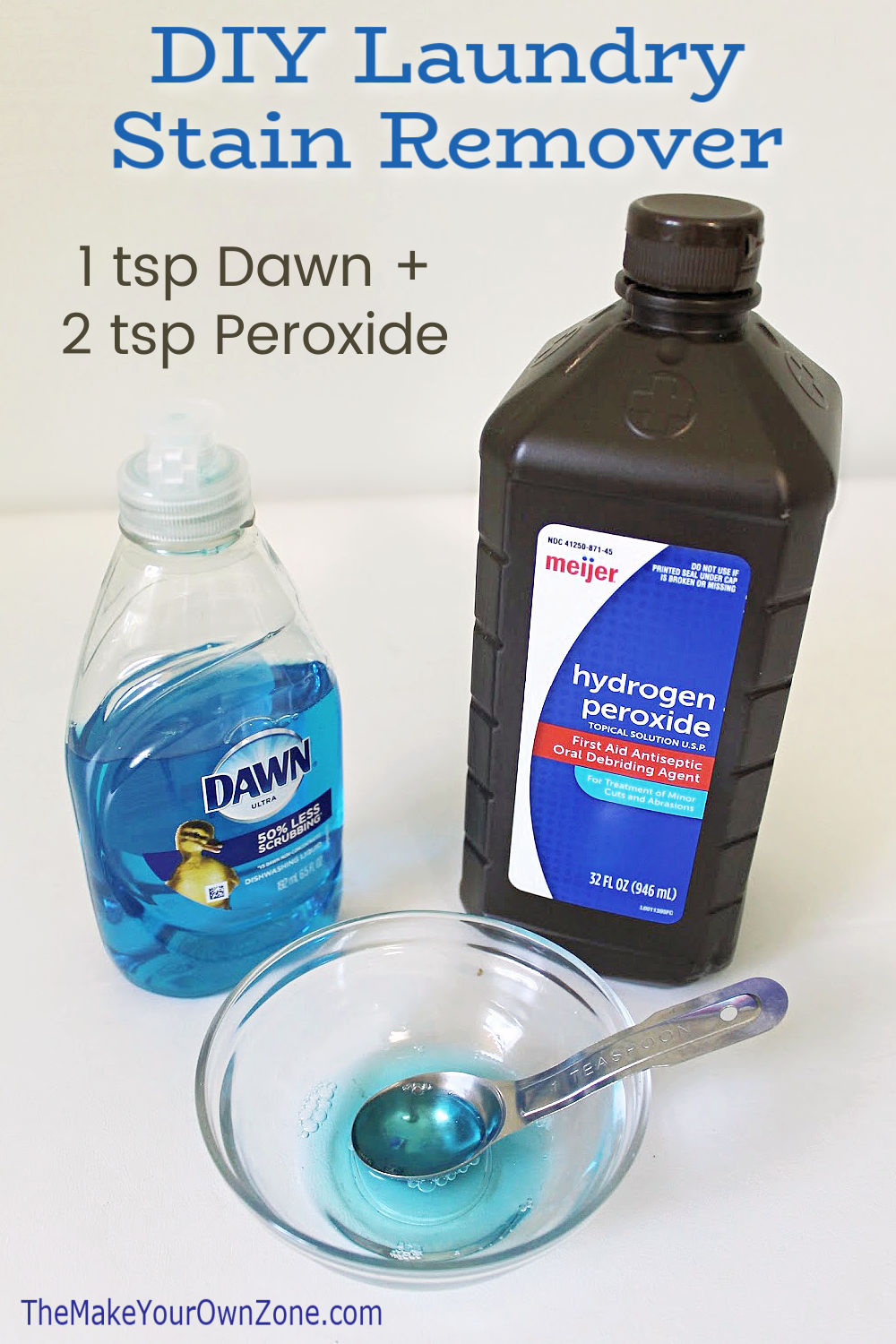
Hydrogen Peroxide and Dish Soap Mix
For white comforters only:
- Mix equal parts hydrogen peroxide and liquid dish soap.
- Apply directly to the stain.
- Wait 10 minutes, then rinse thoroughly.
Test first. Peroxide can bleach some dyes, even on fabrics that appear white but contain colored threads.
Aspirin Paste for Set-In Stains
Crush two aspirin tablets (acetylsalicylic acid, not acetaminophen) and mix with a few drops of water to form a paste.
- Work the paste into the stain with a soft toothbrush.
- Let it sit for 15 minutes, then rinse.
Only use this on white fabrics. The salicylic acid acts as a mild bleach.
Enzyme and Specialty Cleaners
When home remedies fall short, try these targeted products:
- Carbona Stain Remover for coffee and blood
- Grandma’s Secret Spot Remover for old, set-in stains
- Swiss Care for coffee with a pleasant scent
- Biz powder or liquid, soaked in cold water for 30 minutes before washing
- Efferdent denture tablets, dropped into a gallon of water for overnight soaking to brighten whites
Delicate and Vintage Quilts: Handle With Care
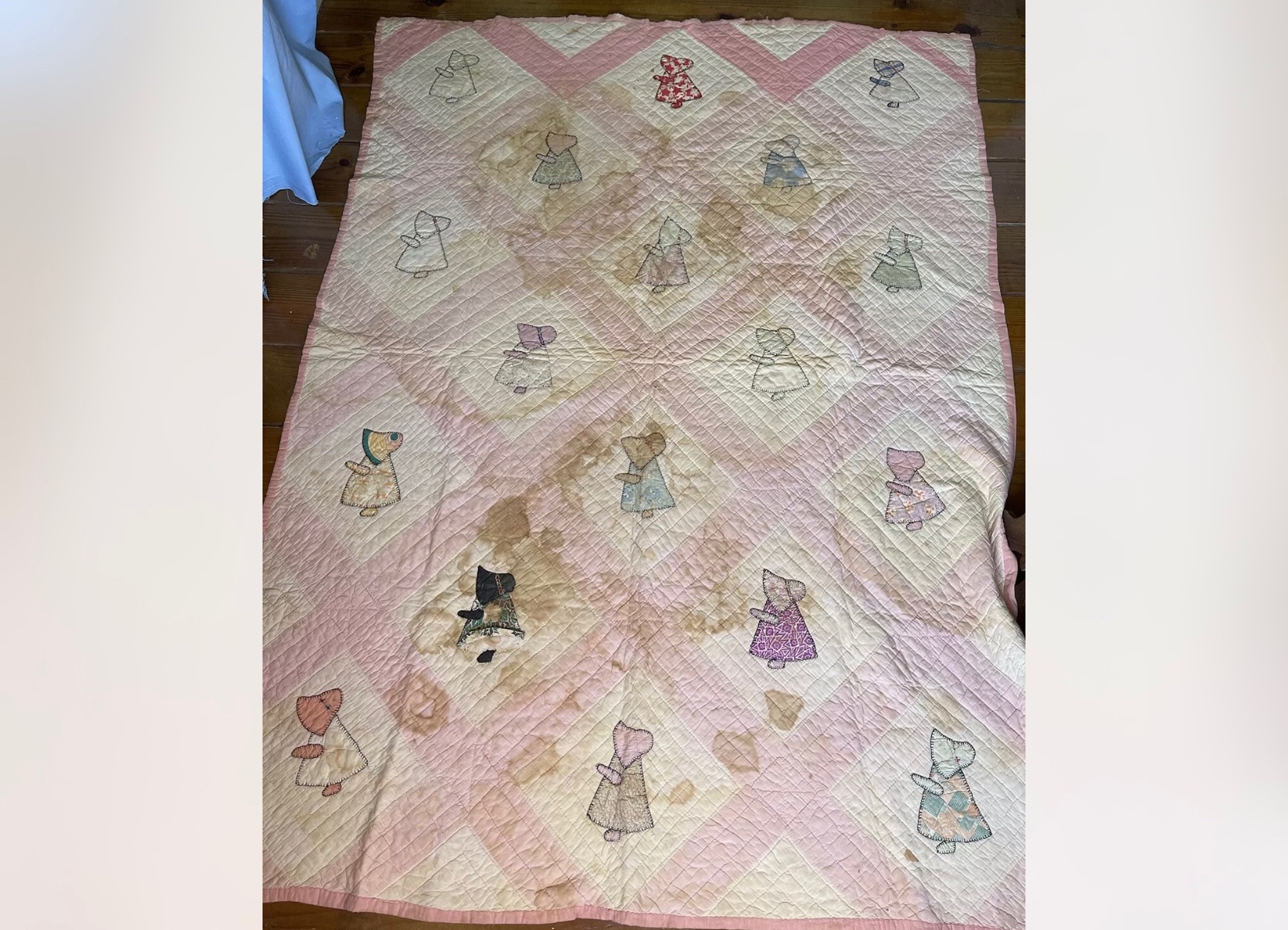
Gentle Cold Soak
For heirloom quilts or mixed-fabric pieces:
- Fill a bathtub with cold water.
- Dissolve a small amount of OxiClean or use a mild Ivory bar soap.
- Submerge the quilt and gently rub stained areas with a soft brush.
- Soak for 30 to 60 minutes, then rinse thoroughly.
Never twist or wring the fabric. Lay it flat to dry on a clean sheet.
Boiling Water Through as a Last Resort
For stubborn stains on sturdy vintage quilts:
- Position the quilt so the stain sits over a drain or basin.
- Pour boiling water through the back of the fabric.
Pouring from the reverse side forces the stain out of the fabric rather than pushing it deeper into the batting.
Dye to Hide What Won’t Come Out
If a stain refuses to budge on a white or light-colored quilt, consider dyeing the entire piece a soft tea or beige color. This unifies the look and turns a flaw into vintage charm.
Troubleshooting Stubborn Stains
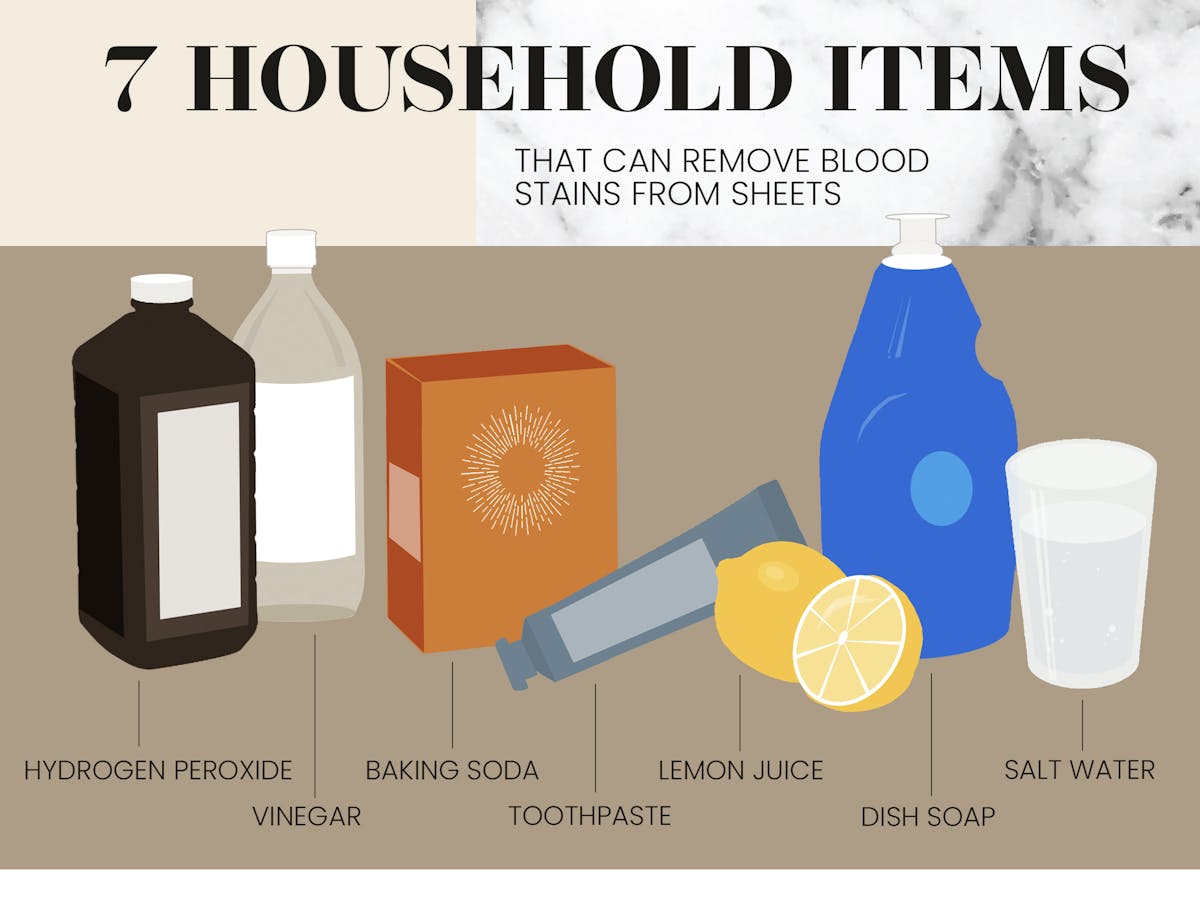
Old or Set-In Coffee Stains
For stains that have dried weeks ago:
- Soak overnight in a Biz or OxiClean solution.
- Use enzyme cleaners designed to break down organic residues.
- Try sequential treatments: peroxide, rinse, then vinegar and dish soap, rinse again.
- Repeat if needed. Some stains take 2 to 3 cycles to disappear.
Always rinse thoroughly between agents to prevent chemical reactions.
Test for Colorfastness First
Before using vinegar, peroxide, aspirin, or boiling water:
- Apply a drop of the solution to a hidden seam or corner.
- Wait 10 to 15 minutes.
- Blot dry and check for color bleeding or fading.
If the color runs, skip that method entirely.
Mattress Protection and Cleanup
Baking Soda for Moisture and Odor
If coffee reached the mattress:
- Blot with a damp cloth, then a dry towel.
- Sprinkle baking soda generously over the area.
- Let it sit overnight to absorb moisture and neutralize odors.
- Vacuum thoroughly with an upholstery attachment.
Never soak a mattress. Excess water leads to mold growth.
Mild Fabric Cleaner for Lingering Stains
Use a mattress-safe product like Resolve, or mix water with a small amount of mild detergent. Test first, dab gently, and allow at least 24 hours of air drying before remaking the bed.
Prevention Tips
Use a Duvet Cover
Your best line of defense. Wash covers weekly to protect the insert underneath. Choose machine-washable fabrics like cotton or microfiber for easy care.
Add a Mattress Protector
A waterproof layer beneath your sheets stops spills from reaching the mattress core. Look for breathable, hypoallergenic options for comfort and protection.
Wash Smart
- Always use cold water for fresh stains
- Avoid bleach unless the fabric is confirmed color-safe
- Air dry when possible to preserve fabric integrity
- Store duvets fully dry to prevent mildew
When to Call a Professional
Seek expert help if:
- The label says “Dry Clean Only”
- The fabric is silk, wool, or antique lace
- The stain covers more than half the surface
- Home treatments failed after 3 attempts
- The duvet is sentimental or valuable, such as a handmade or vintage piece
Dry cleaners use specialized solvents and steam treatments that can lift stains without damaging delicate materials.
Critical Mistakes to Avoid
- Don’t use hot water on fresh stains. It sets the color permanently.
- Don’t rub. Only blot and lift.
- Don’t dry the item until the stain is completely gone. Heat locks in residue.
- Don’t use bleach on colors without testing first.
- Don’t oversaturate a mattress. Mold risk is high.
- Don’t use fabric softener on down. It coats fibers and traps odors.
- Don’t use aspirin or peroxide on colored fabrics. They bleach.
Frequently Asked Questions About Removing Coffee Stains from Duvets
Does cold water really work better than hot water on fresh coffee stains?
Yes. Cold water prevents the tannins in coffee from bonding with fabric fibers. Hot water causes those tannins to set permanently, making the stain much harder to remove later.
Can I use bleach on my duvet cover to remove coffee stains?
Only on white fabrics that are confirmed bleach-safe. On colored fabrics, bleach can cause fading or discoloration. Oxygen bleach like OxiClean is a safer alternative for colors and whites alike.
How do I get a coffee stain out of a duvet insert without washing the whole thing?
Spot clean with a spray stain remover like OxiClean. Apply it directly to the stain, let it sit for 5 to 10 minutes, then blot with a damp cloth and air dry completely. This works well for non-washable inserts.
What should I do if the coffee stain has already dried?
Soak the item in an enzyme-based cleaner or oxygen bleach solution for several hours or overnight. Old stains often require 2 to 3 treatment cycles before they fully disappear. Sequential treatments (peroxide, rinse, vinegar and dish soap, rinse) can also help.
Is it safe to put my duvet in the dryer after treating a coffee stain?
Not until the stain is completely gone. The heat from a dryer can lock in any remaining residue, making the stain permanent. Always confirm the stain is gone before drying.
When should I give up and call a professional?
If the label says “Dry Clean Only,” if the fabric is delicate (silk, wool, antique lace), if the stain covers more than half the surface, or if home treatments have failed after multiple attempts, it’s time to seek professional help.
Key Takeaways for Removing Coffee Stains from Duvets
Speed and technique make all the difference. Blot immediately, flush with cold water, and match your cleaning method to the fabric type. For duvet covers, a vinegar and dish soap soak handles most fresh stains. For inserts, machine wash with oxygen bleach and fluff regularly during drying. For vintage quilts, gentle soaking and careful handling preserve both the fabric and the stain-removal process.
Your next step: identify your duvet type, gather the appropriate supplies, and treat the stain as soon as possible. With the right approach, your bedding can look like new, no replacement necessary.