

How to Fold a Duvet Cover
Folding a duvet cover often turns into a wrestling match with twisted corners and puffy bundles. You shake it out, fold it once, and suddenly the fabric bunches into a shape that refuses to stack neatly. The good news is that learning how to fold a duvet cover the right way removes the frustration entirely.
This guide breaks down four proven folding techniques, fabric-specific tips, and storage strategies that keep your bedding crisp and accessible. By the end, you will have a repeatable system that takes about four minutes per cover and transforms your linen closet into a calm, organized space.
Pick the Best Surface for Folding
Bed, Table, or Floor
Your folding surface shapes the quality of the final result. Each option has clear strengths.
- The bed offers a large, soft area that prevents snags and gives you room to spread the fabric fully. It works well for queen and king sizes.
- A table provides firm, flat support for sharp creases and precise edges. Make sure it is large enough to avoid overhang.
- The floor gives maximum space for oversized covers. Sweep and dust it thoroughly before laying fabric down.
Prep the Space Before You Start
A few quick checks save time later.
- Clear crumbs, dust, and debris from the surface.
- Confirm the duvet cover is completely dry. Folding damp fabric traps moisture and leads to mildew.
- Work in a calm area so you can focus on alignment without rushing.
Smooth the Fabric Before Any Folds
Remove Wrinkles and Air Pockets
Lay the cover flat with the opening accessible. Use both hands to smooth from the center outward, pressing firmly to release trapped air. This single habit prevents the bulky bundles that frustrate most people.
Pro Tip: Fold right after drying. Warm fabric is more pliable and resists stubborn creases.
Check for Twists Early
Shake the cover out vigorously before placing it down. A single twist at the start causes misaligned corners later. Make sure the top and bottom edges run parallel before you begin folding.
The Classic Flat Fold: Step by Step
Fold in Half Lengthwise
Bring the top edge down to meet the bottom edge. Align the corners precisely, like matching puzzle pieces. Smooth again to flatten any air between the layers.
Fold in Half Widthwise
Bring the left side over to meet the right side. You now have a long, narrow strip. Keep the edges straight and press down firmly.
Compact Into Thirds or Quarters
The final shape depends on your storage space.
- Deep shelves: Fold into thirds by bringing the bottom third up, then the top third down.
- Shallow drawers: Fold into quarters for a smaller profile.
The result should be a tidy, stable rectangle that stacks flat.
The Inside-Out Trick for Complete Bedding Sets
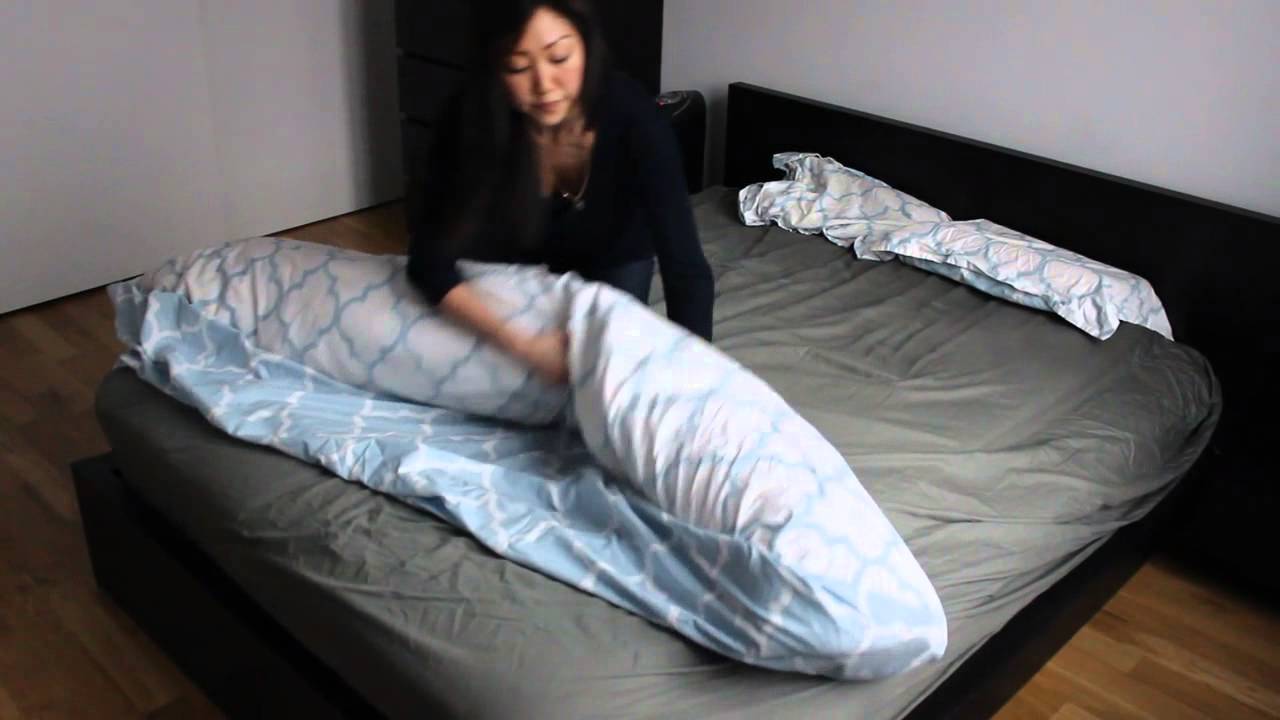
Turn the Cover Inside Out
Flip the duvet cover so the wrong side faces out. Lay it flat and smooth the surface.
Layer the Matching Pieces
Place the folded fitted sheet and pillowcases on one end of the inside-out cover. Keep the stack neat and centered.
Wrap the Set Inside
Lift the far end of the duvet cover and fold it over the stack. Then fold the near end over the top. The cover now acts as a pouch, holding the entire set together.
Why It Works: No more lost pillowcases. You grab one bundle and have everything needed to make the bed.
The Roll Fold for Tight Spaces
Quarter the Cover First
Fold the cover in half lengthwise, then in half widthwise. You now have a compact square.
Roll Tightly From One End
Start at a short edge and roll toward the opposite side. Keep tension even so the roll stays firm and tight.
Secure and Store Vertically
Tuck the open end inside the roll to lock it. Stand the bundles upright in a drawer or bin, like files in a cabinet. This method lets you see every set at a glance.
Store Duvet and Insert as One Unit

Insert the Duvet Before Folding
Place the duvet insert inside the cover and fasten all closures.
Turn the Whole Assembly Inside Out
Flipping the entire unit locks the insert in place and reduces shifting during storage.
Smooth and Fold
Lay the bundle flat and smooth thoroughly to distribute the fill evenly. Fold in half lengthwise, then into thirds. The added thickness means fewer folds are needed.
Secure With a Tie
Use a fabric strap or ribbon to keep the bundle from unraveling. Add a label if you plan to store it long-term.
Adjust Your Method Based on Fabric Type

Cotton
Cotton holds its shape well and responds to structured folding. Sharp creases come easily, making the classic flat fold ideal.
Microfiber
Lightweight and slick, microfiber tends to slip during folding. Hold the edges firmly with both hands and move slowly. The roll method works best because it locks layers in place.
Cotton-Polyester Blends
These balanced fabrics follow standard cotton protocols but benefit from the inside-out method to keep full sets together.
Satin and Silk
Delicate and slippery, these fabrics need extra care. Avoid rough surfaces, support the fabric fully with your hands, and never compress tightly. Store loosely to prevent shine damage.
Solve Common Folding Problems
Bulky Folds From Trapped Air
Pause after every fold and press down with flat palms to expel air before moving to the next step.
Uneven Corners
Reopen the cover and realign the corners exactly. Match them like puzzle pieces before creasing.
Persistent Wrinkles
Ensure the fabric is fully dry before folding. Iron or steam stubborn creases on low heat. Store sets flat under minimal weight.
Sliding Microfiber or Satin
Grip the edges with both hands and fold slowly. The roll method naturally locks slippery layers in place.
Twisted Bundles
Shake the cover out vigorously before laying it down. Snap it in the air to reset the weave and remove hidden twists.
Organize Sets for Quick Access
Group by Bed, Not by Item Type
Store complete sets together: fitted sheet, flat sheet, duvet cover, and pillowcases. This grab-and-go system cuts bed-making time in half.
Use Labeled Containers
Place each set in a breathable bin or box. Label clearly with names like “Master Bedroom,” “Guest Room,” or “Winter Set.” Fabric bins and cardboard boxes work well. Avoid plastic unless you are vacuum-sealing for seasonal storage.
Apply the Container Rule
If the box is full, stop adding items. This forces decluttering and prevents overcrowding.
Manage Extras and Rotate Stock
Create an “Extras” Box
Keep one container for mismatched items: spare pillowcases, single flat sheets, and backup fitted sheets. Audit it every season and donate what you no longer need.
Rotate Your Sets
Use different sets regularly to spread out wear. Store off-season bedding on higher or lower shelves to free up prime space for everyday use.
Optimize Storage Placement
Keep Frequent Sets Accessible
Store everyday linens at eye level or in easy-reach drawers. Reserve high or low shelves for guest or seasonal sets.
Use Bedroom Closets
If your linen closet is full, store spare sets in the bedroom they belong to. This reduces trips and keeps backups close at hand.
Preserve Freshness and Fabric Quality
Store in a Cool, Dry Spot
Avoid attics and basements where moisture causes mildew and heat degrades fibers over time.
Add Freshness Boosters
Tuck silica gel packets into bins to absorb humidity. Scented sachets or unscented dryer sheets keep linens smelling fresh. Skip mothballs because they leave strong odors.
Allow Breathability
Use cotton storage bags or leave bins slightly open. Long-term plastic wrapping traps moisture unless you vacuum-seal for seasonal storage.
Declutter Before You Organize
Sort All Linens First
Pull everything from closets and drawers. Group items by set and check for missing pieces, stains, or tears.
Decide What to Keep
- Minimum: One set per bed.
- Recommended: Two sets per bed so you always have a clean spare.
- Families or frequent hosts: Two to three sets per bed.
Donate usable extras to shelters. Repurpose worn cotton as cleaning rags.
Discard the Rest
Toss heavily stained, torn, or threadbare items. They take up space and degrade faster in storage.
Master the Routine in Four Minutes
Time-Saving Breakdown
With practice, folding becomes fast and predictable.
- 0:00–1:00: Lay out and smooth the fabric.
- 1:00–2:00: Complete the first two folds (lengthwise and widthwise).
- 2:00–3:30: Final compaction and shaping.
- 3:30–4:00: Place in storage.
Expert Note: Speed comes from consistency. Pick one method and repeat it until it becomes second nature.
Build the Habit
Return sets to their bins immediately after laundry. A 30-second habit prevents weekend clutter buildup.
Frequently Asked Questions About Folding a Duvet Cover
What Is the Fastest Way to Fold a Duvet Cover?
The classic flat fold is the quickest method for everyday use. Lay the cover flat, fold in half lengthwise, then in half widthwise, and finish by folding into thirds. With practice, this takes about three to four minutes.
How Do You Fold a Duvet Cover With the Insert Inside?
Insert the duvet into the cover and fasten all closures. Turn the entire assembly inside out to lock the insert in place. Smooth the fabric to distribute the fill evenly, then fold in half lengthwise and into thirds.
How Do You Keep Bedding Sets Together in Storage?
Use the inside-out trick. Turn the duvet cover inside out, place the folded fitted sheet and pillowcases on one end, then fold the cover over the stack to create a self-contained pouch. This prevents pieces from separating.
How Should You Fold Satin or Silk Duvet Covers?
Fold satin and silk slowly with full hand support to prevent sliding. Avoid rough surfaces and never compress tightly. Store loosely in breathable bags to protect the delicate fibers and prevent shine damage.
How Often Should You Declutter Linens?
Audit your linen storage every season. Check the “extras” box and remove anything worn, stained, or no longer needed. Regular decluttering keeps your collection manageable and your closet organized.
Where Should You Store Duvet Covers?
Store duvet covers in a cool, dry place away from attics and basements. Use labeled bins or breathable bags, and keep frequently used sets at eye level for easy access.
Key Takeaways for Mastering Duvet Cover Folding
Knowing how to fold a duvet cover comes down to three core habits: smooth every layer before folding, choose a method that matches your storage, and keep complete sets together. The classic flat fold works for daily use, the inside-out trick keeps sets intact, and the roll method saves space in tight drawers.
Start by decluttering your current linen collection. Keep two sets per bed, donate extras, and discard damaged items. Then pick one folding method and practice it until the process feels automatic. Within a few weeks, you will have a linen closet that looks calm, stacks neatly, and lets you grab a complete bedding set in seconds.